
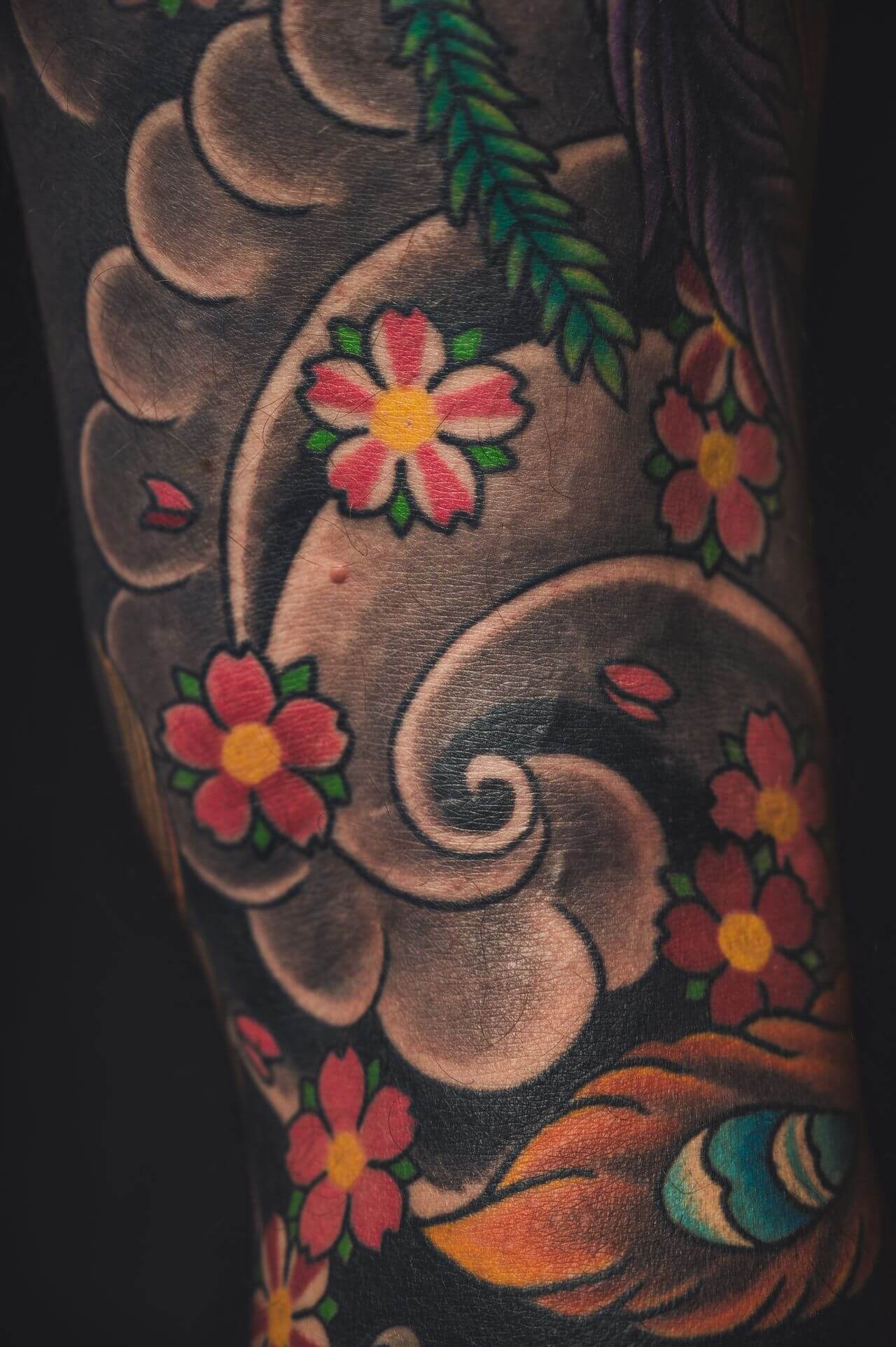
Cherry blossom tattoos often represent beauty that cannot be preserved forever. The flowers reach full bloom briefly, then fall, making them a natural symbol of impermanence, seasonal change, and appreciation for the present moment.
In Japanese art, cherry blossoms are also connected with spring, communal flower viewing, joy, renewal, and the emotional awareness that beautiful experiences eventually pass. Their meaning is not limited to death or sadness.
Key Takeaways
- Cherry blossoms, or sakura, are strongly associated with spring in Japanese culture.
- Their short flowering period supports meanings of impermanence and fleeting beauty.
- Blooming branches can represent renewal, hope, or a new stage of life.
- Falling petals create a more reflective meaning connected with change, separation, or loss.
- Sakura and plum blossoms are different motifs with different seasonal and cultural associations.
- The tattoo’s meaning depends on whether the flowers are budding, blooming, falling, or paired with another subject.
What Does a Cherry Blossom Tattoo Mean?
The central cherry blossom tattoo meaning is the beauty of something temporary. A full bloom is visually powerful precisely because it does not last.
This can make sakura suitable for tattoos about youth, relationships, family, recovery, grief, personal growth, or a period of life that remains meaningful even though it has ended.
Cherry blossoms can also represent seasonal renewal. Their arrival marks spring, so a tattoo showing new buds or opening flowers may communicate hope, emergence, and a return to life after a difficult period.
The flower can therefore hold two connected ideas at once. Life renews itself, but each individual moment remains temporary.
Sakura in Japanese Art and Culture
Cherry blossoms have deep roots in Japanese visual culture and appear frequently in paintings, prints, poetry, textiles, and decorative arts. The Metropolitan Museum of Art describes the blossoming cherry as one of the most familiar images in Japanese art.
Japanese artworks may show blossoms as the main subject, frame figures beneath flowering branches, or use drifting petals to establish season and emotional tone. Artists including Hokusai and Hiroshige depicted cherry blossoms in landscapes, public celebrations, and showers of falling petals.
The flower is not only a private symbol. It is also connected with hanami, the practice of gathering to view blossoms with friends, relatives, and communities.
This social context adds joy, companionship, and shared experience to the symbolism. Sakura can represent people appreciating something together while knowing the season will soon change.
Impermanence and Fleeting Beauty
Cherry blossoms are often interpreted through the idea that beauty is intensified by its temporary nature. Their brief bloom makes the viewer aware that the moment cannot be held indefinitely.
Japanese seasonal imagery frequently celebrates both natural beauty and the poignancy of its disappearance. The changing seasons become reminders that growth, decline, and renewal are part of the same cycle.
A cherry blossom tattoo can express acceptance of change rather than resistance to it. The design may honor something that ended without treating its ending as proof that it lacked value.
This meaning can apply to youth, a relationship, a place once called home, a completed chapter, or a loved one whose presence was brief but significant.
Joy, Spring, and Renewal
Sakura should not be interpreted only as a sad image. Cherry blossom viewing is also associated with celebration, social gathering, and the return of spring.
A branch covered in open flowers can communicate energy, hope, beauty, and a period of emotional renewal. The National Museum of Asian Art notes that sakura can represent both impermanence and the joy of spending time together beneath the blossoms.
This balance makes the flower especially useful in tattoos that acknowledge hardship without allowing hardship to define the entire design.
A tattoo may show that life changes and ends, while still celebrating what grows, returns, and deserves to be enjoyed.
How the Stage of Bloom Changes the Meaning
The flower’s stage can communicate where the wearer sees themselves within a period of change. Buds, open blossoms, and falling petals do not create the same emotional effect.
| Blossom Stage | Possible Tattoo Meaning |
| Closed bud | Potential, preparation, or a beginning not yet visible |
| Opening flower | Growth, recovery, or entering a new stage |
| Full bloom | Beauty, confidence, joy, or life at its height |
| Falling petals | Change, separation, acceptance, or remembrance |
| Bare branch with petals | An ending that still leaves evidence behind |
Falling Cherry Petals
Falling petals create one of the most recognizable sakura compositions. They show beauty in motion rather than presenting the flower as a static decoration.
A few drifting petals can suggest gentle change, distance, or the passage of time. A dense shower can feel more dramatic and may represent sudden loss, surrender, or a major life transition.
The National Museum of Asian Art describes cherry blossoms in Japanese artworks as appearing in serene scenes, national celebrations, and surreal showers of petals. This range shows that falling blossoms can be peaceful, joyful, or emotionally reflective depending on the wider composition.
Petal direction also matters. Petals moving with wind bars can guide the eye through a sleeve, back piece, or chest panel while reinforcing the sense that change is already happening.
Cherry Blossoms and Memorial Tattoos
Cherry blossoms can support memorial designs because their brief bloom reflects the value of a life or relationship that could not last forever. They can honor someone without relying on a portrait, name, or direct image of death.
A single branch may represent one person, while several blossoms can represent relatives, children, or shared memories. Falling petals may mark separation, while new buds can show that influence and family life continue.
The flower should be personalized when possible. A date, handwritten phrase, object, color, or seasonal memory can connect the sakura to the specific person being remembered.
The design does not need to become visually mournful. A bright flowering branch may celebrate the person’s life rather than focus on the circumstances of their death.
Sakura Versus Plum Blossom Tattoos
Cherry blossoms and plum blossoms can appear similar in stylized artwork, but they should not be treated as interchangeable.
Sakura is strongly associated with spring’s vibrant beauty, communal viewing, and the short-lived peak of full bloom. Plum blossoms open earlier, sometimes while winter cold remains, and are often connected with endurance, loyalty, scholarship, and resilience.
| Feature | Cherry Blossom | Plum Blossom |
| Japanese name | Sakura | Ume |
| Seasonal association | Spring in full arrival | Late winter to early spring |
| Common emphasis | Fleeting beauty and impermanence | Resilience and early renewal |
| Petal appearance | Often has a small notch | Usually rounded |
| Branch impression | Softer flowering clusters | Blossoms close to darker branches |
| Tattoo mood | Graceful, reflective, celebratory | Strong, composed, persistent |
The artist should use reference images that clearly identify the intended species. A generic five-petal flower may not communicate the distinction.
Common Cherry Blossom Tattoo Mistakes
One mistake is treating every pink flower as sakura. The petal shape, branch structure, blossom grouping, and seasonal context should help identify the flower.
Another is using cherry blossoms only as decoration while assigning them a complicated cultural meaning afterward. The intended message should guide whether the design shows buds, full flowers, or falling petals.
Overcrowding can also weaken the tattoo. Too many small blossoms may become a field of indistinct shapes as the tattoo settles.
A culturally informed design does not require copying an old painting or print. It requires understanding the flower’s relationship with season, impermanence, community, and visual movement.
Frequently Asked Questions
Can cherry blossoms represent a child?
Yes. Buds, small blossoms, or one flower within a larger branch can represent a child, birth, or new generation.
The design can use a birth date, initial, or specific petal color to make the connection personal.
Can cherry blossoms be paired with snow?
Yes. The pairing can create a transition between winter and spring or represent hope emerging during hardship.
The artist should make the seasonal contrast intentional rather than combining unrelated background effects.
Do cherry blossom tattoos have to be pink?
No. They may be white, black and grey, red, or part of a limited color palette.
The color should support the tattoo’s mood while keeping the flower recognizable.
Can one falling petal have a separate meaning?
Yes. One detached petal may represent one person, departure, distance, or a single moment separated from a larger life story.
Its placement and direction can distinguish it from the rest of the branch.
Let the Blossom’s Stage Tell the Story
Cherry blossom tattoo meaning in Japanese art is built on contrast. Sakura represents spring and renewal, but its beauty is inseparable from the knowledge that the flowers will fall.
A blooming branch can celebrate joy, companionship, youth, or a new stage of life. Drifting petals can acknowledge separation, impermanence, and the passage of time without reducing the design to sadness.
Choose the stage of bloom, direction, color, and pairing according to the experience being represented. A cherry blossom tattoo becomes more meaningful when it shows not only beauty, but the wearer’s relationship with change.