
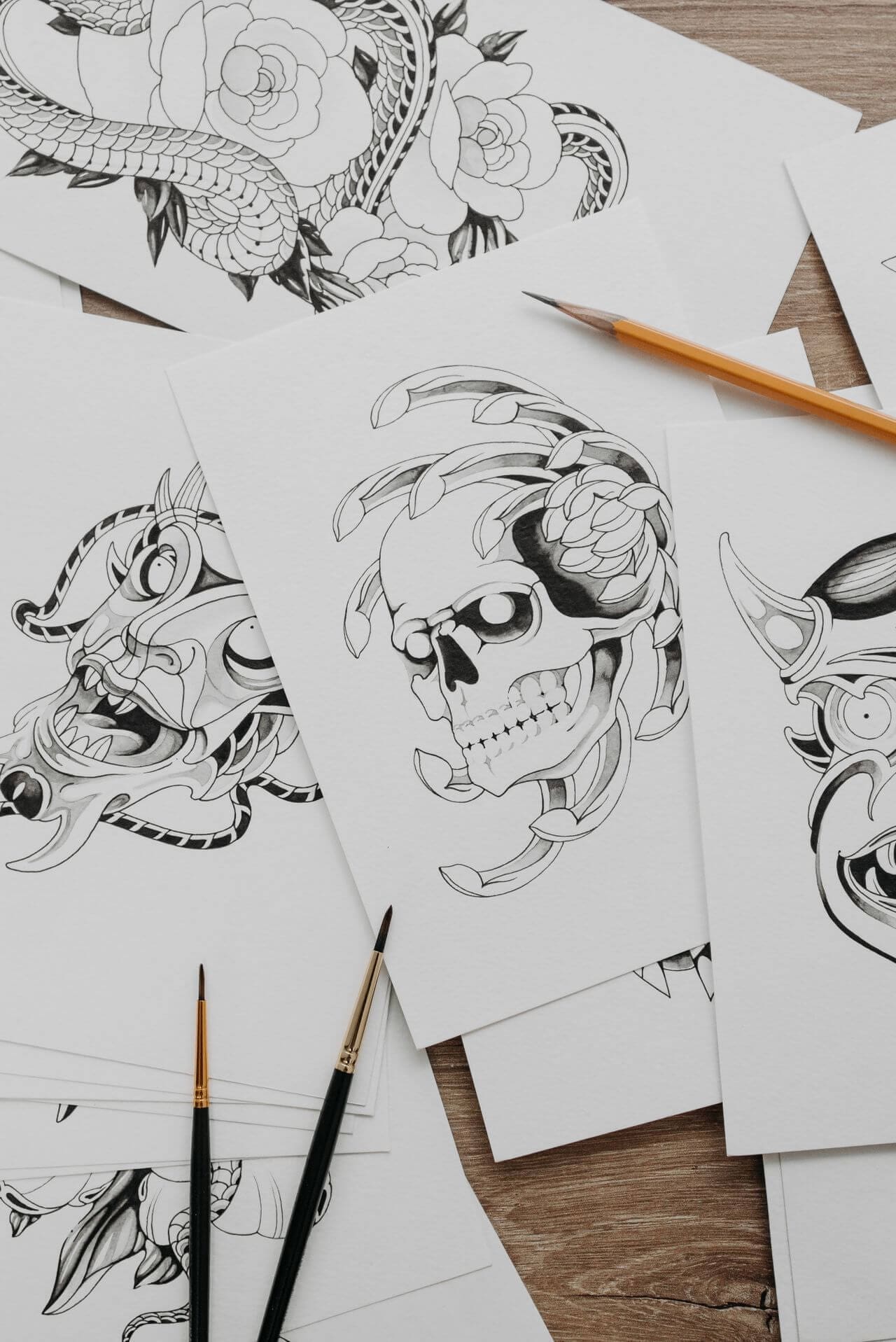
A Hannya mask tattoo represents intense emotion that has transformed into something destructive. Its sharp horns, metallic eyes, and exposed teeth appear demonic, but the mask also retains the pain of the woman beneath the transformation.
The Hannya comes from Japanese Noh theatre, where it is used for female spirits or demonesses consumed by jealousy, resentment, obsession, or grief. Its meaning is more complicated than anger alone because the mask can appear threatening from one angle and sorrowful from another.
Key Takeaways
- The Hannya represents a woman transformed by jealousy, resentment, or obsessive emotion.
- Its expression combines rage with sorrow and emotional suffering.
- In tattoo art, it can symbolize emotional transformation, self-control, survival, or confronting destructive feelings.
- Protective meaning is largely a modern tattoo interpretation rather than the mask’s primary theatrical role.
- A Hannya mask is not interchangeable with every Japanese demon or Oni mask.
- Color, angle, flowers, snakes, and background elements can change how the design is interpreted.
What Does a Hannya Mask Tattoo Mean?
The central Hannya mask tattoo meaning is emotional transformation. A human woman becomes demonic when jealousy, attachment, resentment, or grief overwhelms her.
This transformation can be interpreted as a warning about emotions that are denied, intensified, or allowed to control a person. The mask represents what can happen when pain turns into obsession or revenge.
A Hannya tattoo may therefore symbolize destructive jealousy, betrayal, heartbreak, anger, emotional suffering, or the consequences of losing control. It can also represent recognizing those emotions and refusing to remain trapped by them.
The design does not always claim that the wearer is jealous or vengeful. It may represent someone they overcame, an emotional period they survived, or the part of themselves they have learned to confront.
The Hannya Mask’s Origin in Noh Theatre
The Hannya is a mask type used in Noh, Japan’s classical masked theatre. Noh masks represent different ages, social roles, spirits, women, men, deities, and supernatural beings, with Hannya included among masks for female ghosts and spirits carrying unresolved regret.
The British Museum describes the Hannya as a once-beautiful woman transformed into a demon through jealous rage. The mask appears in major Noh plays including Aoi no Ue and Dōjōji.
In Dōjōji, the character’s transformation becomes connected with obsessive pursuit, rejection, rage, and serpent-like demonic imagery. The performance uses Hannya or more intense snake-related masks during its transformation sequence.
Jealousy and Obsessive Attachment
Jealousy is the meaning most directly associated with the Hannya. The mask represents emotion that has moved beyond ordinary sadness and become consuming.
This jealousy may come from romantic rejection, betrayal, abandonment, comparison, or the fear of losing someone. In Noh stories, the woman’s attachment becomes so intense that it changes both her identity and physical form.
A Hannya tattoo can serve as a warning against allowing jealousy to control judgment. It may also acknowledge how damaging emotional fixation can become for both the person experiencing it and those around them.
Sorrow Beneath the Anger
The Hannya is frightening, but it is not emotionally empty. The mask still communicates the sadness and suffering of the woman who became the demon.
The Noh guide for Kurozuka explains that the mask embodies resentment and fierce obsession while also expressing deep human sadness. This combination prevents the character from becoming a simple monster without history or pain.
This emotional tension is one reason the Hannya works well as a tattoo. It can represent anger that developed from grief, betrayal, rejection, shame, or emotional injury.
A design focused only on horns and teeth may emphasize aggression. A composition that preserves downturned eyes, tears, shadow, or a partially hidden human face can make the sorrow more visible.
How the Mask’s Angle Changes Its Expression
Noh performers use small movements of the mask to change how its fixed features appear under stage lighting. Tilting a mask downward, called kumorasu, creates a clouded or sorrowful expression, while raising it, called terasu, produces a brighter visual effect.
This principle is especially important for the Hannya because its features can appear furious when viewed directly but more tormented when the face turns downward.
A tattoo artist cannot physically tilt the mask after it is applied, but the composition can recreate one emotional angle. A forward-facing Hannya usually feels confrontational and dangerous.
A downward-facing mask can feel burdened, mournful, or reflective. A mask turned partly to the side may suggest internal conflict or the moment between human identity and full transformation.
| Mask Position | Likely Visual Effect | Possible Tattoo Meaning |
| Facing forward | Aggressive and confrontational | Rage, danger, emotional power |
| Tilted downward | Sorrowful or tormented | Grief, regret, hidden suffering |
| Looking upward | Defiant or emerging | Release, challenge, transformation |
| Turned sideways | Divided or transitional | Internal conflict and dual identity |
| Partially covered | Restrained or concealed | Controlled anger or private pain |
Transformation and Loss of Control
The horns, metallic eyes, sharp teeth, and distorted mouth show that the figure is no longer fully human. These features visualize the point where an inner emotional state has changed the person’s outward identity.
A Hannya tattoo can mark a period when anger, grief, or obsession felt overwhelming. It may acknowledge behavior the wearer regrets or an emotional state they refuse to return to.
The mask may also symbolize the fear of becoming defined by one painful experience. In this interpretation, the tattoo is not a celebration of rage. It is a reminder to recognize emotional transformation before it becomes destructive.
The design can show this conflict by combining the Hannya with a human face, broken mask, open hand, fading smoke, or another image that suggests separation between the wearer and the demonized emotion.
Is the Hannya Mask a Symbol of Protection?
Protection is a common modern interpretation of Hannya tattoos, but it should be described carefully. In its theatrical context, the mask primarily represents a jealous or tormented female spirit rather than a guardian figure.
In tattoo art, the frightening face may be used symbolically to repel danger, intimidate harmful forces, or show that the wearer has learned to recognize manipulation and betrayal. This is an interpretive extension of the mask’s threatening appearance.
A Hannya tattoo may also represent emotional protection. The wearer may use it as a reminder to maintain boundaries, avoid repeating destructive relationships, or control emotions that previously caused harm.
This protective meaning is strongest when treated as personal symbolism rather than presented as the mask’s single traditional definition.
Common Hannya Tattoo Design Mistakes
One mistake is describing the Hannya as a generic symbol of strength. Strength may be part of a personal interpretation, but it removes the mask’s central themes of jealousy, pain, transformation, and emotional danger.
Another mistake is treating the Hannya and Oni as the same character. Their visual similarities do not erase their different narrative roles.
Overloading the tattoo with flames, flowers, snakes, skulls, waves, and lettering can also hide the mask’s expression. Supporting elements should clarify the meaning rather than compete with the face.
The artist should understand Japanese-inspired composition and the anatomy of the mask. A Hannya that lacks both rage and sorrow may look decorative but lose the emotional complexity that makes the subject distinctive.
Frequently Asked Questions
Can a Hannya tattoo represent forgiveness?
Yes. The mask can represent recognizing resentment and choosing not to remain controlled by it.
A cracked, removed, or fading mask can strengthen the idea of releasing anger without denying what caused it.
Can a man get a Hannya mask tattoo?
Yes. The mask’s theatrical character is female, but its themes of jealousy, sorrow, obsession, and emotional transformation are not limited by the wearer’s gender.
The wearer should understand the symbol’s origin rather than treating it as a generic masculine demon image.
Can a Hannya mask be shown crying?
Yes. Tears can make the sorrow beneath the demonic expression more visible.
They should be integrated carefully so they deepen the emotional meaning rather than turning the mask into a simple sad face.
What does a broken Hannya mask tattoo mean?
A broken mask may represent overcoming jealousy, escaping emotional control, revealing the human identity underneath, or ending a destructive cycle.
The location of the cracks can determine whether the mask appears defeated, removed, or still transforming.
Understanding the Woman Behind the Demon
Hannya mask tattoo meaning is built on emotional contradiction. The face is dangerous and enraged, but it also preserves the sorrow of someone changed by jealousy, rejection, obsession, or grief.
That human origin separates the Hannya from a general demon mask. It can represent the danger of uncontrolled emotion, the damage caused by betrayal, or the effort required to confront a destructive part of oneself.
Choose the facial angle, color, placement, and supporting imagery according to which side of the mask matters most. A strong Hannya tattoo should show more than anger. It should preserve the tension between the demon the viewer sees and the suffering person who remains underneath.