
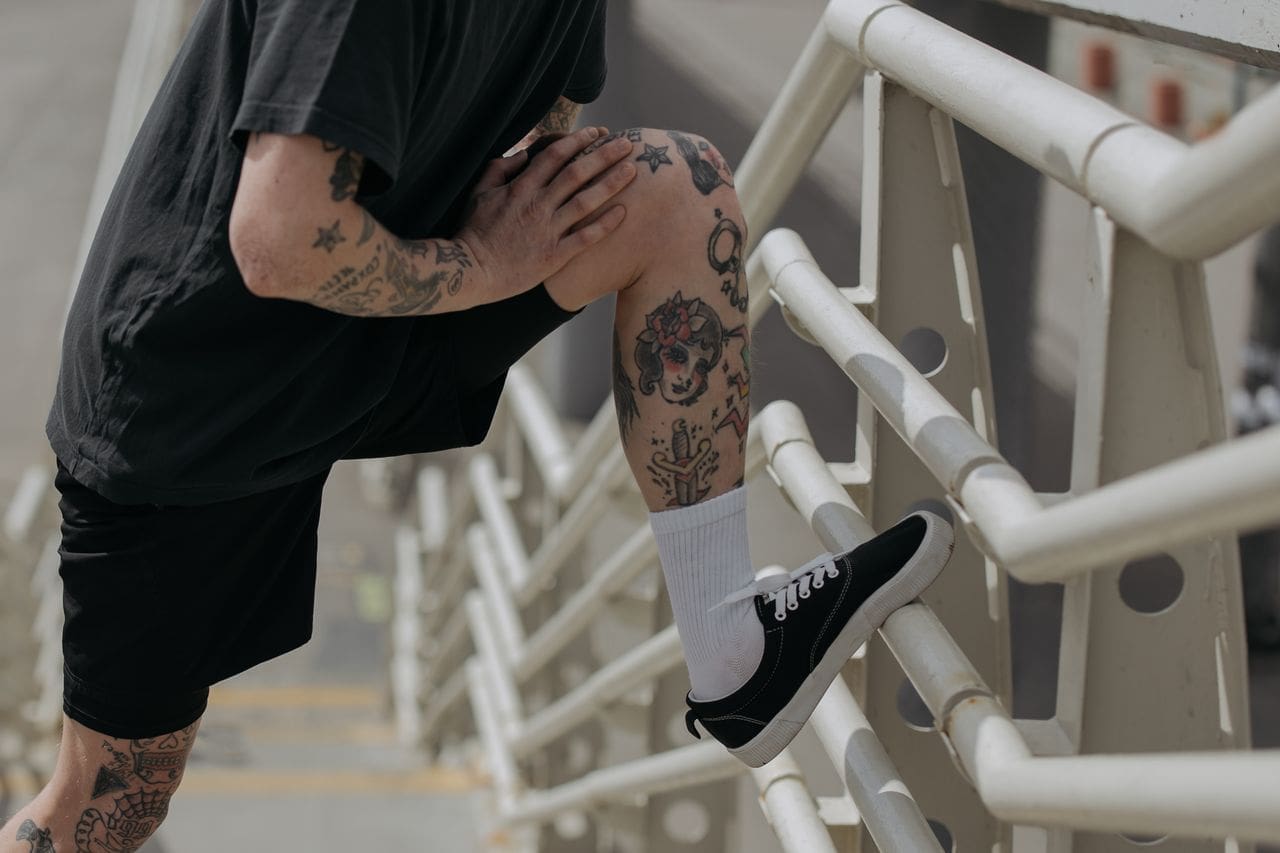
You can return to exercise after getting a tattoo, but immediately returning to your normal training routine may expose healing skin to unnecessary sweat, friction, stretching, and contact with shared gym surfaces.
A new tattoo is controlled trauma to the skin and needs time to heal. Cleveland Clinic notes that tattoo healing varies according to factors such as size and placement, with larger pieces potentially taking substantially longer to fully heal than smaller tattoos.
There is no universal number of days that works for every tattoo and every workout. The safest return depends on what you had tattooed, where it is located, how intense your exercise is, and how the skin is healing.
Key Takeaways
- Avoid immediately returning to intense workouts that create heavy sweating or repeated friction against a fresh tattoo.
- Light activity may be easier to resume than strenuous training when it does not stretch, rub, or contaminate the tattooed area.
- Tattoo location matters because movement around joints can repeatedly pull the healing skin.
- Tight gym clothing can irritate a new tattoo through rubbing and trapped moisture.
- Shared benches, mats, pads, and equipment should not come into direct contact with healing tattooed skin.
- Do not swim after a workout while the tattoo is healing.
Why Exercise Can Affect a Healing Tattoo
Tattoo needles repeatedly puncture the skin and deposit pigment into the dermis.
The result may look like finished artwork when you leave the studio, but the skin still needs to recover. Mild redness, soreness, clear fluid, flaking, itching, and some scabbing can occur during normal healing.
Exercise introduces several factors that may irritate this healing surface.
Sweat creates moisture. Clothing and equipment create friction. Repetitive movement stretches the tattooed area, while gym environments introduce additional opportunities for contact with shared surfaces.
None of these factors automatically ruins a tattoo. The concern is unnecessary irritation while the skin is most vulnerable.
Can You Exercise the Day After Getting a Tattoo?
For many people, skipping strenuous exercise immediately after a tattoo is the more practical option.
The first days are commonly when the tattoo is sore, swollen, or releasing small amounts of fluid. Cleveland Clinic recommends gentle care during the first week and avoiding unnecessary rubbing or irritation.
High-intensity exercise can produce substantial sweating and movement during this early period.
NHS guidance for medical tattooing also advises avoiding high-intensity exercise and activities that produce sweating during healing. Although medical tattooing is not identical to decorative tattooing, the guidance reflects the same basic concern about protecting recently tattooed skin.
Follow the instructions given by your tattoo artist because the tattoo’s size, location, dressing, and application may change what is appropriate.
There Is No Single Return-to-Workout Timeline
Advice such as “wait exactly 24 hours” or “always wait two weeks” is too simple for every tattoo.
A small tattoo on the upper arm does not experience the same movement as a large piece covering the knee.
A light walk does not expose the body to the same sweat, friction, and stretching as an intense CrossFit session, long-distance run, wrestling practice, or heavy leg workout.
Healing time also varies. Cleveland Clinic states that tattoo size and location influence recovery and that deeper layers of skin can continue healing after the surface appears normal.
A useful approach is to base your return on both time and the condition of the skin.
How Sweat Affects a New Tattoo
Sweating itself does not automatically remove tattoo ink.
The concern is the environment created during heavy exercise.
Sweat can leave the area damp, while tight clothing may hold that moisture against the skin. Repeated rubbing can then increase irritation.
Sweaty hands, towels, gym equipment, and clothing can also introduce additional contaminants if they repeatedly touch the tattoo.
This matters most while the skin is still actively healing.
If you resume exercise and sweat around the tattoo, follow your artist’s cleaning instructions afterward rather than leaving the area damp for an extended period.
Do not scrub aggressively in an attempt to remove sweat.
Friction May Be a Bigger Problem Than Sweat
Some workouts create relatively little sweat but substantial rubbing.
Cycling shorts may repeatedly contact a thigh tattoo. A sports bra can sit directly across a fresh rib or sternum piece.
Weightlifting belts may rub the stomach, ribs, or lower back. Shoes and socks can create pressure over ankle or foot tattoos.
Cleveland Clinic recommends loose, breathable clothing during the early tattoo-healing period specifically to reduce sticking and rubbing.
Consider where the clothing seam, strap, waistband, or equipment will sit before deciding whether a workout is appropriate.
| Tattoo Placement | Exercise Concern |
| Shoulder | Barbell position, straps, upper-body movement |
| Upper arm | Tight sleeves and repetitive arm movement |
| Forearm | Equipment contact and gripping surfaces |
| Chest | Bench contact and stretching |
| Ribs | Twisting and tight clothing |
| Back | Benches, mats, and pressure |
| Thigh | Compression shorts and repeated movement |
| Knee | Deep flexion and skin stretching |
| Calf | Running movement and tight socks |
| Ankle or foot | Shoes, socks, and repetitive friction |
Tattoos Over Joints Need Extra Consideration
A tattoo near the elbow, knee, wrist, ankle, shoulder, or hip moves repeatedly during exercise.
A fresh knee tattoo may feel comfortable while standing but become tight during deep squats.
An elbow tattoo may repeatedly fold and stretch during pressing or pulling movements.
You do not need to keep the joint completely motionless, but intense repetitive movement may be uncomfortable while the skin is tender, flaky, or scabbed.
If an exercise causes the tattoo to feel as though it is pulling, rubbing, or becoming increasingly irritated, modify the movement or give the area more recovery time.
Weight Training After a Tattoo
Weight training may be possible to resume gradually when the tattoo does not sit directly in the path of equipment or clothing.
A calf tattoo, for example, may have little involvement during a light upper-body session.
A fresh upper-back tattoo is different. Bench pressing may place the tattoo directly against a shared bench while simultaneously applying pressure and friction.
A shoulder tattoo may also contact a squat bar.
Consider both movement and equipment contact.
If the tattoo would touch a public bench, pad, mat, strap, belt, or machine repeatedly, choosing another exercise is usually more practical while the area remains fresh.
Running After Getting a Tattoo
Running creates repeated movement and often substantial sweat.
The placement determines how significant this becomes.
A small upper-arm tattoo may experience relatively little mechanical stress during an easy run, while thigh, knee, calf, ankle, and foot tattoos move continuously.
Running clothing can also matter.
Compression shorts, leggings, tight socks, and shoes may rub directly against lower-body tattoos.
Outdoor runners have the additional concern of sunlight. Healing tattoos should be protected from direct sun according to aftercare guidance.
If running causes significant rubbing or leaves the tattoo heavily soaked with sweat, additional rest may be preferable.
When Exercise Should Stop
Some redness and soreness can be normal shortly after tattooing.
Symptoms should generally improve rather than become progressively worse.
Cleveland Clinic advises seeking medical evaluation for signs such as fever, skin that becomes hot, significant drainage or odor, increasing pain, spreading redness, or red streaks extending away from the tattoo.
Do not try to exercise through these symptoms.
Increasing swelling, unusual discharge, worsening pain, or feeling systemically unwell calls for medical assessment rather than another workout.
Frequently Asked Questions
Can I lift weights if my tattoo is on a different body part?
Possibly. Consider whether the tattoo will still encounter sweat, clothing friction, stretching, or shared equipment even when the tattooed muscles are not being trained.
Will sweating make tattoo ink come out?
Normal sweating does not simply wash pigment out of the dermis. The larger concern is irritation, moisture, contamination, and friction while the skin is healing.
Can I use a sauna after exercising with a new tattoo?
Avoid saunas while the tattoo is still healing. Heat and heavy sweating create conditions that are better postponed until the skin has recovered. NHS medical-tattooing guidance similarly advises avoiding saunas and sweat-producing exercise during healing.
Can I exercise once my tattoo starts peeling?
Peeling indicates that healing is still underway. Whether you can exercise depends on the activity, tattoo location, friction, and condition of the skin rather than peeling alone.
Let the Tattoo Heal Before Chasing Your Normal Training Schedule
Getting a tattoo does not mean abandoning exercise for weeks regardless of the circumstances.
It does mean treating newly tattooed skin differently from normal skin.
Heavy sweating, tight clothing, repeated stretching, shared equipment, and direct pressure can all make an early return to training harder on the tattoo.
Adjust the activity to the placement, return gradually, keep the area clean, and follow the aftercare instructions given by your artist.
Your normal workout routine will still be there. Giving the tattoo enough time to settle makes it easier to return without turning a few missed sessions into an avoidable healing problem.