
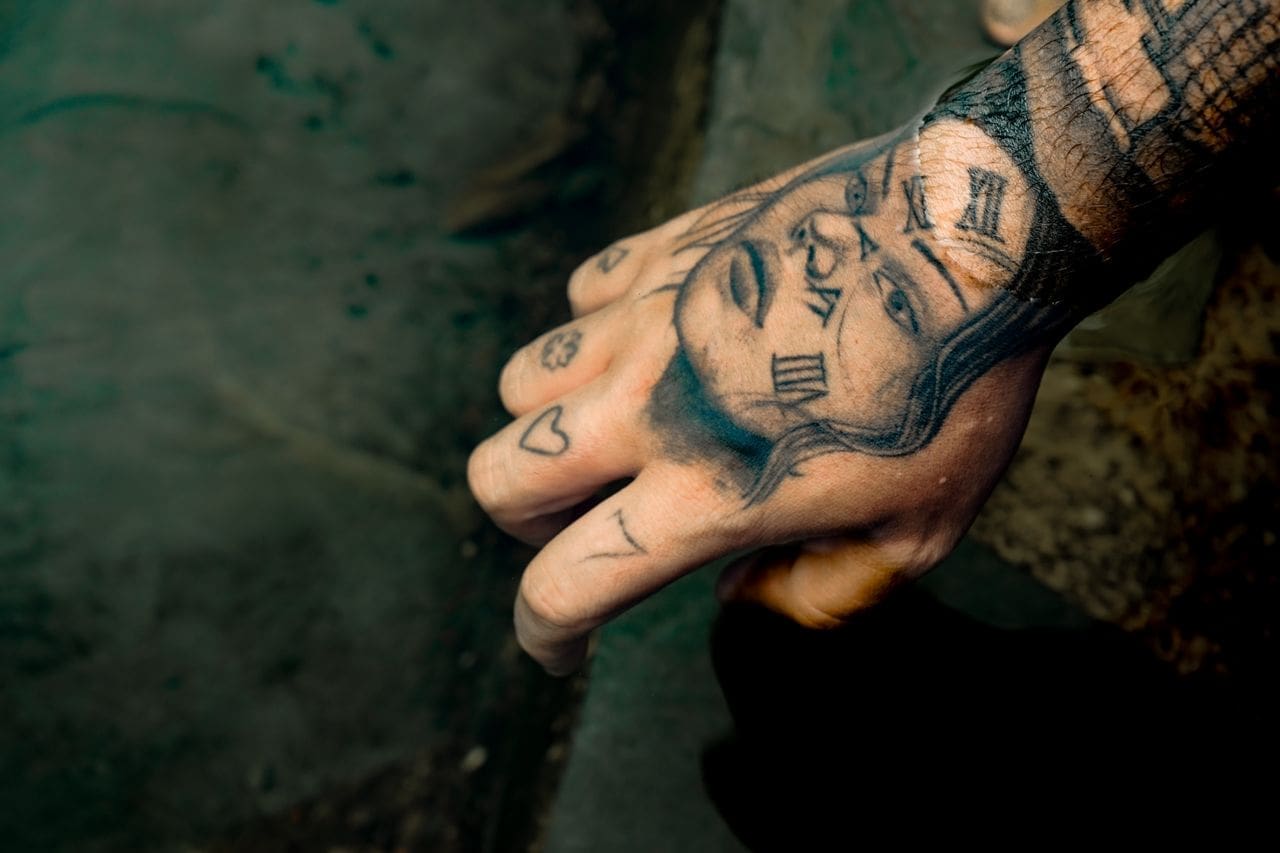
Tattoo inspiration is everywhere, but inspiration and copying are not the same thing.
A useful reference helps you communicate subject, mood, composition, texture, color, or placement. Copying happens when another artist’s finished tattoo is treated as the exact design to reproduce.
The strongest custom tattoos usually come from several references rather than one completed tattoo. That gives the artist room to understand what you like and turn those preferences into something original for your body.
Key Takeaways
- Use finished tattoos to identify style preferences, not as exact templates.
- Museum archives, books, photography, nature, architecture, fashion, and historical artwork can provide stronger source material.
- Save references for different purposes such as subject, composition, color, and texture.
- Tell the artist what you like about each image instead of simply sending a folder.
- Avoid tracing another tattoo artist’s custom composition.
- Public-domain artwork can be useful, but it still needs to be adapted for skin.
- Personal photographs and objects can make common tattoo concepts more original.
- A reference board should guide the artist while leaving room for their own visual interpretation.
Why Tattoo Inspiration Matters
Most clients do not begin with a finished tattoo design in their heads.
They may know they want a wolf, botanical sleeve, memorial tattoo, Japanese-inspired piece, or ornamental design but struggle to describe the exact visual direction.
References solve that problem.
A photograph can communicate the posture of an animal. A painting can show the lighting. A historical print may provide texture, while another tattoo can demonstrate the general scale or placement you like.
The goal is to communicate preferences, not to design the entire tattoo before speaking with the artist.
A strong reference collection gives the artist information they can interpret rather than instructions they must copy.
Use Tattoo Portfolios for Style, Not Duplication
Tattoo artist portfolios are one of the best places to learn what styles appeal to you.
Look at line weight, shading, color, composition, subject matter, negative space, and how designs fit different parts of the body.
A tattoo may catch your attention because of its overall mood rather than the exact subject.
You may discover that what you actually like is the heavy black background, delicate internal linework, muted color, symmetrical framing, or way the design wraps around the arm.
That distinction matters.
Instead of asking another artist to reproduce the tattoo, explain which visual qualities attracted you.
A completed custom tattoo belongs to a specific collaboration between another artist and client. Your design should use the reference to communicate direction rather than duplicate their final result.
Follow the Artist You Want to Book
One of the easiest ways to avoid copying is to gather references from the artist you actually intend to hire.
Their existing portfolio already shows the visual language they are comfortable using.
If you like several tattoos from the same artist, identify what they have in common.
The similarity may be their black saturation, floral composition, facial rendering, fine hatching, color palette, or use of negative space.
Showing an artist their own work can help communicate which direction within their portfolio appeals to you.
You are not asking them to reproduce the previous tattoo. You are showing them which parts of their established style you want applied to a new concept.
Museums and Digital Art Collections
Museum collections provide an enormous source of tattoo inspiration.
Historical paintings, sculpture, prints, manuscripts, decorative objects, textiles, botanical studies, and religious artwork can all lead to tattoo concepts.
Someone interested in engraving-style tattooing might study Renaissance prints or nineteenth-century scientific illustrations.
A client interested in ornamental work may examine architectural carving, metalwork, ceramics, or textile patterns.
Japanese-inspired tattoo research can include ukiyo-e prints, historical paintings, and traditional visual narratives.
Museum sources are especially useful because they encourage clients to look beyond tattoos and study the artistic traditions that influence them.
The tattoo artist can then reinterpret those sources for skin rather than copying an existing tattoo adaptation.
Historical Prints and Public-Domain Artwork
Older artwork can provide strong source material for custom tattoos.
Botanical illustrations, anatomical diagrams, medieval woodcuts, engravings, maps, celestial charts, and natural-history plates already contain visual structures that translate well into tattooing.
Some historical works are in the public domain, meaning copyright restrictions on the original work may no longer apply.
Public domain does not mean the image should be transferred directly to the body without adaptation.
Historical artwork may contain too much detail, poor proportions for the chosen placement, or line spacing intended for paper rather than skin.
The tattoo artist still needs to simplify, reshape, and rebuild the design.
A public-domain reference is a source. The tattoo should become a new interpretation.
Books Are Underrated Tattoo Reference Sources
Books can provide better inspiration than endlessly scrolling through tattoo feeds.
Art-history books, field guides, mythology collections, botanical references, architecture books, fashion archives, and photography books can introduce subjects you may never encounter through an algorithm.
A book can also provide context.
Instead of seeing one isolated symbol, you may learn where it came from, how it was historically represented, and which other images belong with it.
This is useful for cultural, religious, historical, or mythological tattoo ideas.
Understanding the context can prevent combinations that look visually attractive but make little sense together.
Books also reduce the temptation to copy whichever tattoo happens to be receiving attention online.
Nature as Tattoo Inspiration
Nature provides almost unlimited reference material.
Flowers, leaves, insects, birds, animals, shells, bones, mountains, clouds, rivers, rocks, mushrooms, and marine life can all become tattoo subjects.
Original photographs are especially valuable.
If you want a botanical tattoo, photograph plants from a family garden or meaningful location.
An animal tattoo can be based on photographs showing the pose, markings, or anatomy you prefer.
Nature references allow the artist to build a composition from the actual subject rather than from another person’s tattoo.
This also creates more room for stylistic interpretation.
The same flower can become traditional, fine line, engraving-inspired, blackwork, illustrative, or realistic depending on the artist.
Personal Photography
Your own photographs can make a common tattoo idea much more specific.
A mountain tattoo based on a generic online image may look attractive, but a photograph from a trip can connect the design directly to your experience.
The same applies to homes, pets, family members, vehicles, landscapes, objects, and travel locations.
The photograph does not need to be professionally taken.
The artist may use several images to understand the subject.
One photograph might show the correct shape while another provides better lighting or details.
Personal references are particularly valuable for memorial tattoos because they preserve details that cannot be found in generic imagery.
Family Objects and Keepsakes
Physical objects can provide tattoo inspiration that does not exist online at all.
A grandparent’s watch, handwritten recipe, necklace, fishing lure, sewing tool, military object, instrument, piece of furniture, or book may carry personal meaning.
Photograph the object from several angles and explain why it matters.
The artist may reproduce it closely or simplify it into a more graphic representation.
Wear, scratches, damage, and imperfections can sometimes become part of the tattoo.
Those details may be more recognizable to the wearer than a perfectly cleaned version.
Objects like these create designs that are difficult to duplicate because the source belongs to your own history.
Frequently Asked Questions
Can I ask permission to copy another person’s tattoo?
You can ask, but permission from the wearer may not address the original artist’s creative work. Creating a new interpretation is usually the better approach.
Is tattoo flash meant to be copied?
Flash is specifically designed to be tattooed, but artists have different policies. Some flash is repeatable, while some designs are retired after one client chooses them.
Can I bring artwork I created myself?
Yes. The tattoo artist may still need to adjust line spacing, proportions, contrast, or composition so the artwork functions properly on skin.
What if I only have one reference image?
You can still use it. Explain which features you like and give the artist permission to redesign the composition rather than requesting an exact duplicate.
Build a Reference Library, Not a Copying Template
Tattoo inspiration should help you understand what you want without deciding every line before the artist begins.
Look at tattoo portfolios for style, museums for artistic history, nature for subjects, photography for composition, and personal objects for meaning.
Use several references when possible and explain what each one contributes.
The final tattoo should reflect your interests and the artist’s creative judgment rather than reproduce a design already living on someone else’s body.
Good inspiration gives the artist somewhere to begin. It should not remove their opportunity to create.