
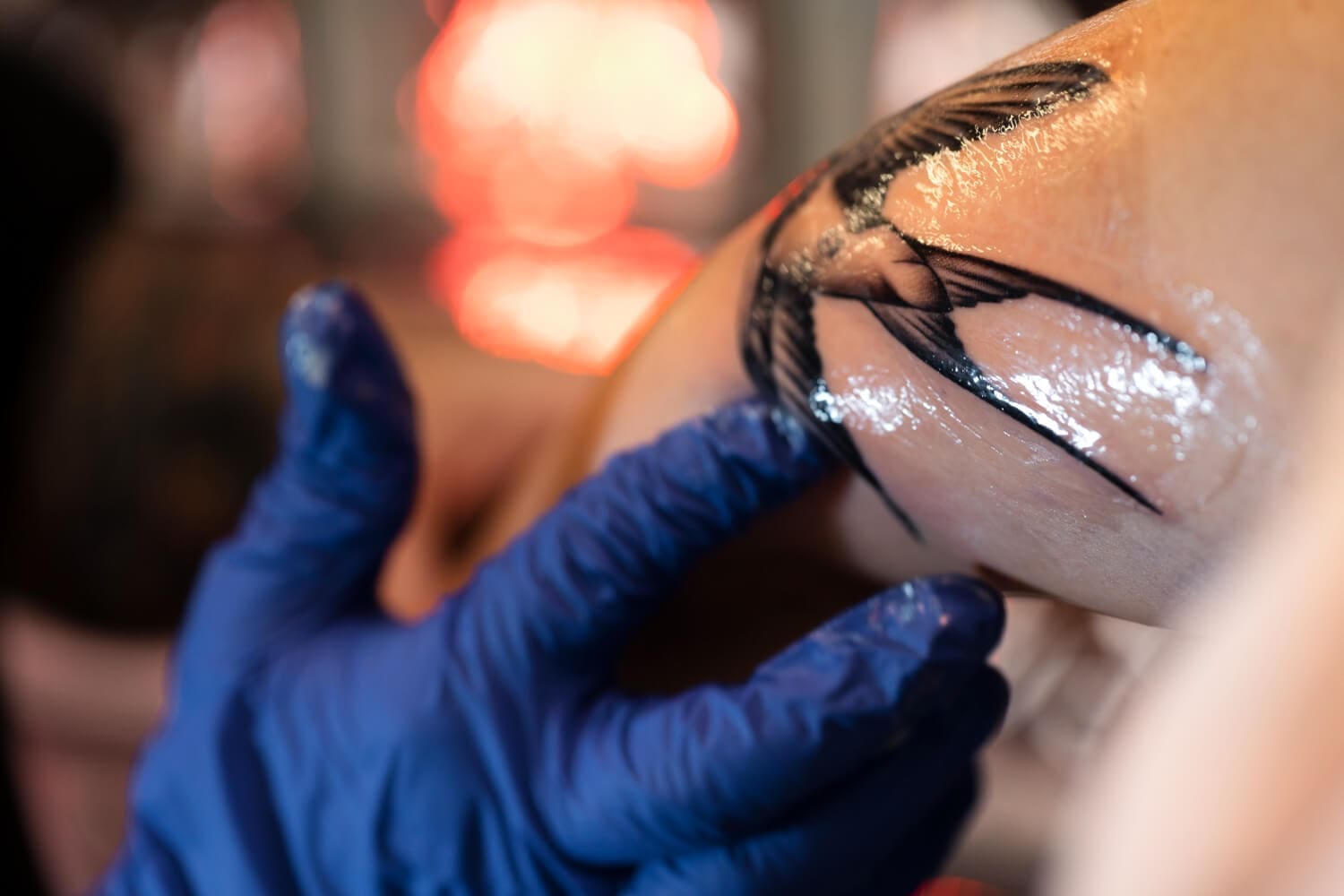
A new tattoo needs consistent care while the skin repairs itself. The goal is to keep the area clean, limit irritation, and avoid habits that can disturb the surface before it closes.
Your artist’s instructions should remain the starting point because dressing type, placement, saturation, and skin response can change the care plan. This guide covers the common steps from dressing removal through full surface healing.
Key Takeaways
- Wash your hands before touching the tattoo.
- Follow the removal schedule for the dressing your artist applied.
- Clean the area gently with lukewarm water and mild fragrance-free soap.
- Use only a thin layer of moisturizer when the skin feels dry or tight.
- Avoid soaking, scratching, friction, heavy sweating, and direct sunlight.
- Seek medical care when redness, pain, heat, swelling, or discharge gets worse.
Follow the Instructions for Your Dressing
Tattoo dressings are not interchangeable. Adhesive film may remain in place longer than a temporary wrap, so follow the removal schedule provided by your artist.
Contact the studio if the seal breaks, fluid leaks out, or the surrounding skin develops intense itching, blistering, or swelling.
| Dressing situation | Recommended response |
| Dressing is secure and comfortable | Leave it for the instructed period |
| Edge begins lifting | Ask whether it needs trimming, replacing, or removing |
| Fluid leaks through the seal | Contact the studio and follow removal guidance |
| Skin reacts strongly to adhesive | Seek prompt advice before applying another product |
| Temporary wrap reaches its removal time | Remove it and begin the first wash |
Do not reapply household plastic wrap or an unapproved adhesive unless the artist specifically tells you to use it.
How to Perform the First Wash
Wash your hands before removing the dressing or touching the tattoo. Keep the used covering away from anything that may contact the skin again.
Remove adhesive film slowly, preferably under lukewarm running water when advised by the artist.
Clean the tattoo with lukewarm water and mild fragrance-free soap. Use your fingertips with light pressure, then rinse until no soap or loose residue remains.
Do not scrub or use hot water, alcohol, hydrogen peroxide, or strongly scented cleansers.
Pat the tattoo dry with a clean disposable towel or allow it to air-dry briefly. Do not rub it or cover it with a damp towel.
Medical tattoo aftercare guidance also recommends gentle drying rather than rubbing and avoiding unnecessary contact with the pigmented area while it heals.
Keep Washing Gentle and Consistent
Clean the tattoo according to the artist’s schedule and whenever it becomes contaminated. Repeated washing can increase dryness, so more is not always better.
Clear fluid, plasma, or excess pigment can appear early. Gently remove surface residue during washing.
Use clean hands every time. Keep phones, bathroom surfaces, used towels, pets, and unwashed bedding away from the tattoo.
Apply Moisturizer in a Thin Layer
Moisturizer can reduce tightness and excessive dryness, but the tattoo should not remain greasy. Apply a small amount and spread it until the skin feels comfortable rather than slick.
Choose a fragrance-free product recommended by the artist. Stop using it if the area develops burning, worsening redness, raised bumps, or unusual swelling.
| Skin condition | What to do |
| Skin feels comfortable | Do not add product automatically |
| Skin feels dry or tight | Apply a very thin layer |
| Product remains visible and sticky | Reduce the amount |
| Tattoo feels constantly wet | Review the routine with the artist |
| Rash appears after application | Stop the suspected product and seek advice |
Avoid testing several new balms, oils, or lotions at once. A simple routine makes irritation easier to identify.
Let Peeling and Scabs Separate Naturally
Dryness, itching, light flaking, and small scabs can be part of normal healing. These changes should become less intense as the surface repairs.
Do not pick, scratch, or pull loose skin. Doing so can reopen the area, remove pigment, and increase the risk of scarring.
Wear loose, clean clothing and reduce rubbing from waistbands, straps, shoes, bedding, and work equipment.
NHS medical tattooing guidance warns against picking or dislodging scabs because doing so may contribute to pigment loss.
Activities to Avoid While the Tattoo Heals
Protect the tattoo from prolonged water exposure, contamination, friction, and direct sunlight. The restriction period varies, so follow the condition of the skin and the artist’s guidance rather than one fixed number of days.
| Activity | Main concern | Practical adjustment |
| Swimming and hot tubs | Bacteria, chemicals, and soaking | Wait until the surface has healed |
| Long baths | Prolonged moisture | Take brief showers |
| Heavy exercise | Sweat, stretching, and equipment contact | Modify training around the placement |
| Tight clothing | Friction and trapped moisture | Wear loose, breathable fabric |
| Direct sun | Irritation and pigment damage | Keep the tattoo shaded or covered |
| Contact sports | Impact and contamination | Avoid pressure and skin contact |
Brief gentle washing is different from soaking. Do not submerge the tattoo in pools, oceans, lakes, hot tubs, or baths while the surface remains open, scabbed, or peeling.
Clinical aftercare guidance recommends avoiding chlorinated swimming pools until scabs have separated and the area has healed.
Know What Normal Healing Can Look Like
Mild localized redness, tenderness, warmth, clear fluid, dryness, itching, flaking, and light scabbing can occur. These signs should gradually improve rather than spread or intensify.
| More consistent with healing | More concerning |
| Redness remains close to the tattoo | Redness spreads outward or darkens |
| Tenderness decreases | Pain becomes stronger |
| Clear or slightly pink fluid appears early | Thick or foul-smelling discharge |
| Mild warmth settles | Heat and swelling increase |
| Light flaking or scabbing | Blisters or open sores |
| Itching improves | Painful bumps or a widespread rash |
The American Academy of Dermatology identifies some redness, soreness, clear fluid, itching, flaking, and scabbing as possible parts of healing. Worsening pain, spreading redness, fever, chills, pus, or open sores are more concerning.
When to Contact the Artist or a Healthcare Professional
Contact the artist for questions about dressing removal, washing, product use, normal peeling, activity restrictions, or healed assessment. A clear photo can help the studio understand the concern.
An artist can explain expected healing but should not diagnose an infection or prescribe treatment. Seek medical care when pain, redness, heat, swelling, discharge, or general illness becomes worse rather than better.
Fever, chills, red streaks, pus, open sores, facial swelling, breathing difficulty, or rapidly spreading symptoms need prompt attention. The FDA recommends contacting a healthcare professional when the area is not healing or develops a rash, especially when fever is present.
The FDA also recommends notifying the artist and asking for the ink brand, color, and batch information when an adverse reaction may involve pigment.
Common Tattoo Aftercare Mistakes
| Mistake | Better approach |
| Touching the tattoo with unwashed hands | Wash hands first |
| Scrubbing during cleaning | Use fingertips and light pressure |
| Applying thick layers of balm | Use a thin layer only when needed |
| Picking flakes or scabs | Let them fall away naturally |
| Swimming before the skin closes | Wait until healing is complete |
| Returning to friction-heavy activity too soon | Modify activity around the placement |
| Using several new products | Keep the routine simple |
| Ignoring worsening symptoms | Seek medical evaluation |
Frequently Asked Questions
Can I sleep directly on a new tattoo?
Avoid prolonged pressure when possible, especially if the area is weeping or tender. Use clean bedding and choose a position that reduces rubbing and sticking.
Why does my tattoo look shiny after peeling?
New surface skin can look smooth, shiny, or slightly cloudy before its normal texture returns. Wait until the tattoo settles before judging pigment loss.
Can I shave over a healing tattoo?
Wait until the area is free from scabs, flakes, open skin, and tenderness. Shaving too early can cut or irritate the new surface.
Should I cover my tattoo again for work?
Extra covering can trap heat and moisture, while leaving the area exposed may create friction or contamination. Ask the artist for a placement-specific solution based on your uniform and workplace.
Give the Skin Time to Finish Healing
Good aftercare is controlled and uncomplicated. Keep the tattoo clean, use only enough moisturizer to manage dryness, and avoid friction, soaking, and contamination while the surface repairs.
Watch whether symptoms are improving or worsening. Mild irritation should settle, while increasing pain, spreading redness, heat, pus, fever, or a strong rash deserves medical attention.
The tattoo may look dull, flaky, or uneven during healing. Protect the skin and wait for it to settle before judging the final clarity or deciding whether a touch-up is needed.