
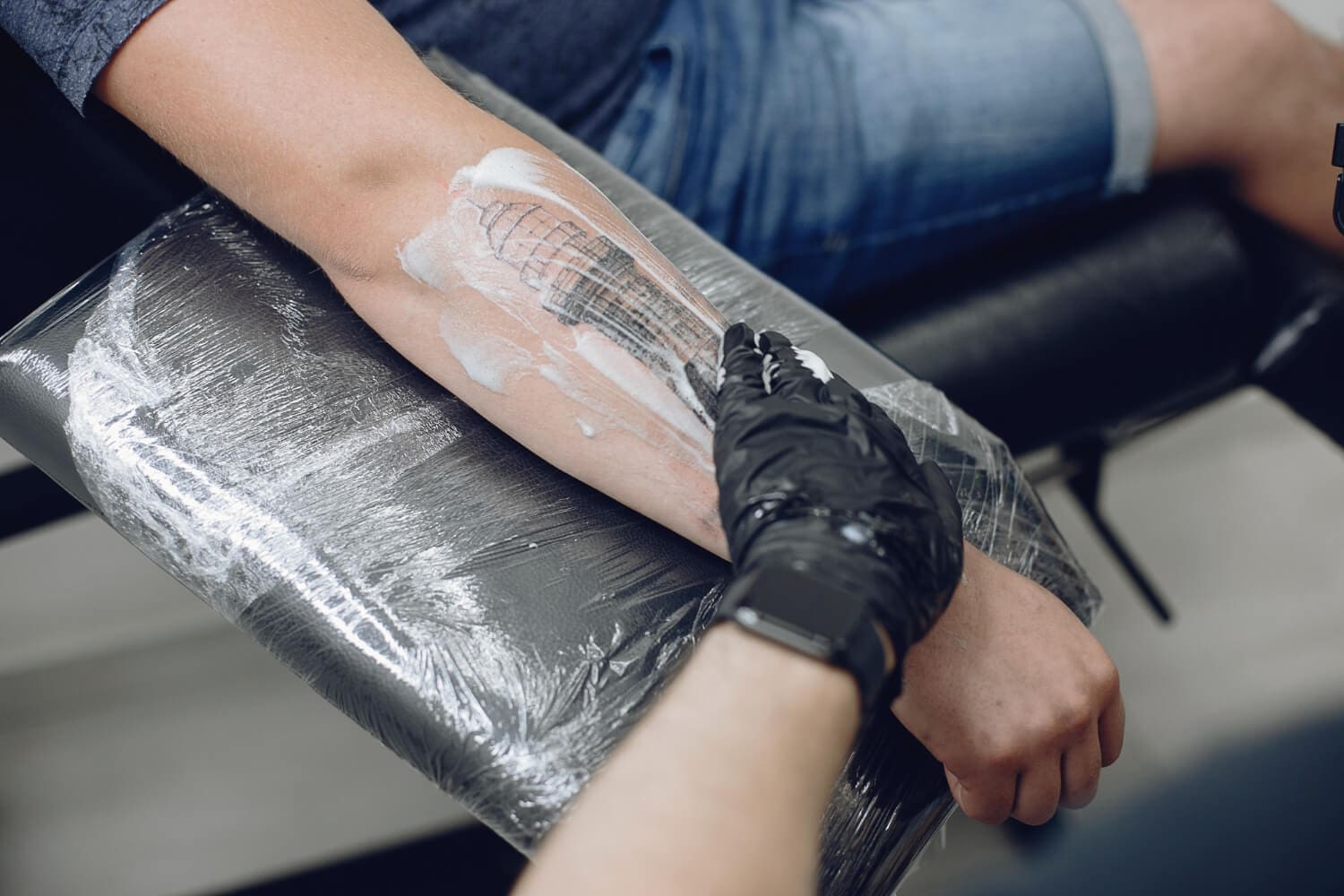
Most tattoos appear healed on the surface within two to four weeks, but the deeper layers of skin may continue settling after peeling and scabbing have stopped. Healing time varies according to tattoo size, placement, saturation, skin condition, application technique, and aftercare.
The most useful way to judge recovery is to watch how the tattoo changes from one stage to the next. Redness, tenderness, dryness, itching, and peeling should gradually decrease rather than become more severe.
Key Takeaways
- The first few days commonly involve redness, tenderness, warmth, and fluid.
- Dryness, itching, flaking, and light scabbing often develop during the first two weeks.
- The surface may look calmer after two to four weeks while deeper healing continues.
- Large, heavily saturated, and friction-prone tattoos may take longer to settle.
- A tattoo can look cloudy or dull before the healed color becomes clearer.
- Increasing pain, spreading redness, pus, fever, or red streaks are not normal healing signs.
Tattoo Healing Timeline at a Glance
No timeline applies perfectly to every tattoo. The stages below describe common changes rather than fixed deadlines.
| Healing period | Common appearance | Main concern |
| First 24 hours | Redness, warmth, tenderness, plasma, excess ink | Protecting the fresh tattoo |
| Days 2 to 3 | Mild swelling, soreness, fluid, early tightness | Keeping the area clean |
| Days 4 to 7 | Dryness, itching, light scabbing | Avoiding scratching and friction |
| Days 7 to 14 | Peeling, flaking, cloudy color | Letting loose skin separate naturally |
| Weeks 2 to 4 | Calmer surface, reduced itching, uneven dullness | Continuing gentle care |
| Weeks 4 and beyond | More stable texture and color | Long-term protection |
The First 24 Hours
A fresh tattoo is a controlled skin injury. The area may look red, feel warm or tender, and release a mixture of plasma, small amounts of blood, and excess pigment.
A protective film, absorbent pad, or temporary wrap may be placed over the tattoo before you leave the studio. Follow the removal schedule given for that specific dressing rather than assuming every covering stays on for the same amount of time.
Some fluid beneath adhesive film can be expected early on. Contact the artist when the dressing leaks, rolls back significantly, or causes intense burning, blistering, or swelling.
The tattoo often appears darker and more saturated immediately after the session. Surface pigment, redness, and moisture can make the fresh result look different from the healed tattoo.
Days 2 to 3: Redness and Tenderness Begin to Settle
Mild soreness, localized warmth, and slight swelling may continue during the first few days. These symptoms should remain close to the tattoo and slowly become less noticeable.
Clear or slightly pink fluid may still appear, especially on larger or heavily worked tattoos. The surface may also begin to feel tight as fluid production decreases.
The American Academy of Dermatology notes that some redness, swelling, soreness, and clear fluid can occur after tattooing. These changes become more concerning when redness spreads, pain increases, or additional infection symptoms appear.
Placement can affect how the tattoo feels during this stage. Tattoos near ankles, feet, knees, elbows, or other areas affected by movement and gravity may remain swollen or uncomfortable longer than tattoos on less mobile areas.
Days 4 to 7: Dryness, Itching, and Light Scabbing
The tattoo often becomes drier during the second part of the first week. Tightness, mild itching, flaking, and small scabs may replace the wet or glossy appearance seen earlier.
Scabs protect areas where the surface has not fully closed. They should remain relatively light rather than forming unusually thick, wet, or expanding crusts.
Do not pull at scabs or scratch the tattoo. Removing healing tissue early can reopen the surface, disturb pigment, and contribute to uneven color or scarring.
NHS aftercare guidance advises allowing crusting and scabs to separate naturally because picking them may remove pigment from the treated area.
The tattoo may look uneven during this stage. Some areas can appear darker because of scabs, while others may look pale beneath early peeling.
Days 7 to 14: Peeling and Cloudy Color
Peeling often becomes more visible during the second week. Thin flakes of skin may come away during washing or when clothing moves across the area.
The process can resemble peeling after a mild sunburn, although the tattoo should not be deliberately rubbed or exfoliated. Allow loose skin to fall away without pulling it.
The tattoo may temporarily look cloudy, faded, or less defined. A thin layer of new surface skin can soften the appearance of the pigment while the area continues healing.
Itching may still occur, but it should become more manageable. Severe itching accompanied by a spreading rash, raised bumps, blisters, or increasing swelling may indicate irritation or an allergic reaction rather than ordinary peeling.
The American Academy of Dermatology identifies itching, flaking, and scab formation as changes that can occur during normal tattoo healing.
Weeks 2 to 4: The Surface Begins to Look Healed
By the end of the second week, many tattoos have completed most visible peeling. The skin may feel smoother and less tender, although mild dryness or a shiny appearance can remain.
A tattoo that looks healed is not always ready for every activity. Small flakes, sensitivity, tightness, or shiny new skin indicate that the surface is still stabilizing.
Continue avoiding unnecessary friction and prolonged water exposure until the skin is fully closed. Swimming should wait until scabs and peeling have ended because chemical exposure, bacteria, and soaking can interfere with recovery.
Color may appear lighter than it did immediately after tattooing. Fresh tattoos often look unusually dark because of surface ink, inflammation, and moisture.
Do not schedule a touch-up based on how the tattoo looks while it is still shiny, peeling, or sensitive. The artist needs to see stable healed skin before deciding whether pigment loss is permanent.
After Four Weeks: Deeper Healing and Color Settling
After visible peeling ends, the deeper skin can continue repairing and reorganizing. The tattoo may gradually look clearer as dryness, cloudiness, and surface reflection decrease.
Larger tattoos and designs with dense color packing or solid black may remain sensitive longer. Areas that received repeated passes may also take more time to settle.
The tattoo should feel increasingly similar to the surrounding skin. Persistent tenderness, raised areas, open spots, or recurring fluid after the expected surface-healing period should be discussed with the artist or a healthcare professional.
Healed color will not always match the intensity of the fresh tattoo. Some softening is expected as the pigment is viewed through repaired skin rather than an inflamed surface.
What Can Make a Tattoo Heal More Slowly?
Tattoo healing depends on both application and aftercare. Two tattoos completed on the same day may recover at different rates.
| Factor | How it may affect healing |
| Large size | Creates a wider area of injured skin |
| Heavy saturation | May require more passes and increase irritation |
| Difficult placement | Adds movement, pressure, swelling, or friction |
| Tight clothing | Repeatedly rubs the healing surface |
| Excess moisture | Keeps the area wet and irritated |
| Picking or scratching | Reopens the skin and removes healing tissue |
| Poor general health | May affect the body’s repair process |
| Excessive skin trauma | Can prolong redness, scabbing, and tenderness |
A slower-healing tattoo is not automatically infected. The important distinction is whether symptoms are continuing to improve or becoming more severe.
Frequently Asked Questions
Why do some parts of a tattoo heal faster than others?
Different areas may receive different amounts of shading, color, and repeated passes. Skin thickness, movement, and clothing contact can also cause one section to settle before another.
Can one tattoo go through peeling twice?
A second period of fine dryness or light flaking can occur as the surface continues renewing. Thick scabbing, new fluid, worsening redness, or renewed pain is not the same as ordinary fine peeling.
Does black ink heal faster than color ink?
Ink color alone does not determine healing speed. The amount of saturation, number of passes, skin response, and size of the tattoo usually matter more.
Why does my healed tattoo feel slightly raised?
Some tattoos remain mildly raised for a period after the surface closes, especially where lines or color were worked heavily. Persistent, itchy, painful, or increasingly raised areas should be assessed rather than assumed to be normal.
Let the Tattoo Settle Before Judging the Result
Healing is a gradual change from redness and fluid to dryness, peeling, and stable new skin. Each stage should move toward less pain, less irritation, and a surface that feels increasingly normal.
Do not judge color, line consistency, or touch-up needs while the tattoo is still scabbed, shiny, cloudy, or peeling. Protect the area and allow enough time for the healed result to become visible.
The calendar provides a useful guide, but the direction of healing matters more than the exact day. Symptoms that steadily improve usually reflect recovery, while symptoms that spread or intensify need prompt attention.