
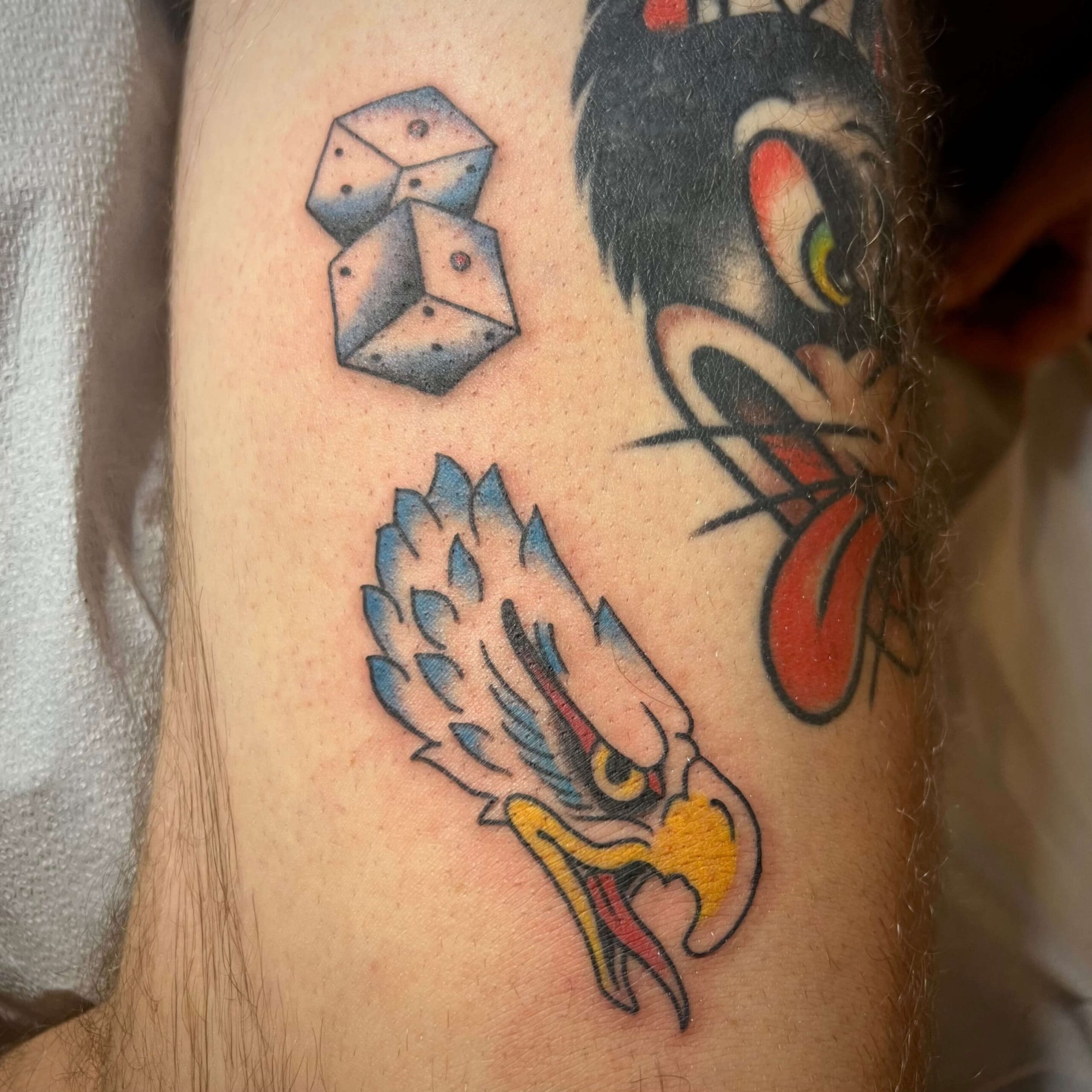
The first week after a tattoo is when the skin is most vulnerable to contamination, friction, excessive moisture, and accidental damage. Care should remain simple: follow the dressing instructions, wash gently, apply only enough moisturizer to control dryness, and leave scabs or peeling skin alone.
Some redness, swelling, soreness, clear fluid, itching, flaking, and light scabbing can occur during normal healing. These signs should gradually improve rather than spread or become more painful.
Key Takeaways
- Follow the removal schedule for the exact dressing your artist applied.
- Wash your hands before touching the tattoo.
- Use lukewarm water and mild fragrance-free soap.
- Pat the tattoo dry instead of rubbing it.
- Apply moisturizer in a thin layer only when needed.
- Avoid swimming, prolonged soaking, direct sunlight, and unnecessary friction.
- Seek medical care when redness, pain, heat, swelling, or discharge gets worse.
First-Week Tattoo Care at a Glance
Healing does not follow an identical schedule for every tattoo. Size, placement, saturation, dressing type, skin condition, and application technique can change what happens each day.
| Day | Common changes | Main care priority |
| Day 1 | Redness, warmth, tenderness, plasma, excess ink | Protect the tattoo and follow dressing instructions |
| Day 2 | Mild swelling, soreness, fluid, early tightness | Begin or continue gentle washing |
| Day 3 | Reduced fluid, increasing dryness, mild itching | Keep the tattoo clean without overwashing |
| Day 4 | Tightness, flaking, light scabbing | Moisturize lightly and avoid friction |
| Day 5 | More noticeable peeling and itching | Let loose skin separate naturally |
| Day 6 | Patchy, cloudy, or dull appearance | Continue gentle care |
| Day 7 | Reduced tenderness with ongoing flakes or scabs | Protect the area and monitor progress |
Day 1: Protect the Fresh Tattoo
The artist will normally cover the tattoo with adhesive film, an absorbent pad, a non-adhesive dressing, or a temporary wrap. These coverings have different removal schedules, so use the instructions provided for your specific dressing.
Do not remove adhesive film early simply because fluid has collected beneath it. Some plasma, blood, and excess pigment may be visible during the first day.
Contact the studio if the dressing develops a major leak, rolls back enough to expose the tattoo, or causes intense itching, burning, blistering, or swelling.
Keep the tattoo away from dirty surfaces, pet hair, tight clothing, and unnecessary handling. Do not touch the covering repeatedly to check the tattoo.
How to Wash a New Tattoo
Use lukewarm water and mild fragrance-free soap. Clean the area gently with your fingertips, using enough pressure to remove surface fluid without scrubbing.
Rinse until no soap or loose residue remains. Pat the tattoo dry with a clean disposable towel or allow it to air-dry briefly.
Do not rub the skin with a bath towel, washcloth, sponge, or exfoliating tool. NHS tattooing guidance recommends gentle drying and warns against rubbing the treated area.
Avoid alcohol, hydrogen peroxide, heavily scented cleansers, and harsh antiseptic products unless a qualified professional has specifically directed their use.
Day 2: Continue Gentle Cleaning
Mild redness, soreness, warmth, and swelling may still be present. The tattoo may also release a small amount of clear or slightly pink fluid.
Wash according to the artist’s instructions and whenever the tattoo becomes visibly contaminated. More frequent washing does not necessarily improve healing and may increase dryness.
Use clean hands every time. Keep the tattoo away from used towels, unwashed bedding, bathroom surfaces, phones, pets, and shared gym equipment.
Wear loose, clean clothing that does not press against the area. Check that waistbands, cuffs, straps, shoes, or undergarments are not repeatedly rubbing the tattoo.
Day 3: Expect Tightness and Early Itching
Fluid usually begins decreasing as the surface starts drying. The tattoo may feel tight, slightly rough, or mildly itchy.
A small amount of moisturizer may reduce uncomfortable dryness. Apply only a thin layer that absorbs rather than leaving the skin greasy or sticky.
| Skin condition | What to do |
| Skin feels comfortable | Do not apply more product automatically |
| Skin feels dry or tight | Use a very thin layer of moisturizer |
| Product remains shiny or sticky | Reduce the amount |
| Tattoo remains constantly wet | Review the routine with the artist |
| Burning or bumps appear after use | Stop the suspected product and seek advice |
Choose a fragrance-free product recommended by the artist. Avoid testing several balms, oils, and lotions during the same week.
Day 4: Light Scabbing May Begin
Small dry scabs or rough patches may appear as the skin continues repairing itself. Light flaking may also begin around lines or heavily saturated sections.
Do not pick, peel, or soften scabs deliberately. Removing them before they separate naturally can reopen the surface and contribute to pigment loss or scarring.
NHS aftercare guidance advises allowing scabs to fall away naturally because picking them may remove pigment from the tattooed area.
Continue washing gently and moisturizing only when needed. Thick ointment layers should not be used to keep scabs constantly soft.
Day 5: Peeling Often Becomes More Noticeable
The tattoo may begin peeling in thin flakes that resemble dry skin after a mild sunburn. Flakes can contain pigment, but this does not automatically mean the tattoo is losing all its color.
Allow loose skin to fall away during normal washing or movement. Do not pull sections that remain attached.
The tattoo may temporarily look dull, cloudy, uneven, or lighter than it did when fresh. New surface skin and dryness can change how the pigment appears.
Itching may become stronger during this stage. Use loose clothing, a light moisturizer, and a cool compress over clean fabric when appropriate, but do not scratch or slap the tattoo.
Day 6: Protect the Peeling Surface
Some areas may look almost calm while others remain flaky or lightly scabbed. Differences within one tattoo are common because linework, shading, and color may create different levels of skin trauma.
Continue avoiding pressure and repetitive rubbing. Be especially careful with bedding, work uniforms, backpack straps, shoes, sports equipment, and tight exercise clothing.
Do not exfoliate the tattoo to create an even appearance. The surface will settle gradually without scrubbing.
A healing tattoo can still be vulnerable even when most redness has disappeared. Continue treating it as recovering skin rather than returning immediately to every normal activity.
Day 7: Look for Overall Improvement
By the end of the first week, tenderness, warmth, redness, and swelling should generally be less noticeable. Peeling, dryness, itching, or light scabbing may still continue.
The tattoo is not necessarily fully healed. Continue gentle washing, light moisturizing, and protection from friction while flakes or scabs remain.
Judge the direction of healing rather than expecting the tattoo to look finished on a specific day. Improvement matters more than matching an exact timeline.
Activities to Avoid During the First Week
Do not submerge the tattoo in swimming pools, baths, hot tubs, lakes, or oceans. Prolonged moisture, chemicals, and microorganisms can interfere with healing.
NHS guidance advises avoiding chlorinated swimming pools until scabs have separated and the area has healed.
| Activity | Main concern | Safer adjustment |
| Swimming | Soaking, bacteria, and chemicals | Wait until the skin has healed |
| Long baths | Prolonged moisture | Take brief showers |
| Heavy exercise | Sweat, stretching, and friction | Modify the activity |
| Contact sports | Impact and contamination | Avoid contact with the area |
| Direct sunlight | Irritation and pigment damage | Use shade or loose clothing |
| Tight clothing | Rubbing and trapped moisture | Wear breathable, loose fabric |
Fresh tattoos should be kept out of direct sunlight. Wait until the skin has healed before applying normal sunscreen to the area.
Frequently Asked Questions
Can I use a fan to dry my tattoo?
Allowing the tattoo to air-dry briefly is generally different from directing a dusty fan toward broken skin. Pat it dry with clean disposable material or follow the drying method provided by your artist.
Should I change my bedsheets every day?
Daily replacement is not always necessary, but bedding should be clean and free from pet hair, dirt, sweat, and product residue. Change it when it becomes contaminated.
Can I wear compression clothing over a new tattoo?
Compression clothing may trap sweat and create constant pressure or friction. Ask the artist when the placement normally requires compression for a separate medical or athletic reason.
Why is only one color in my tattoo more swollen?
Different areas may receive different amounts of saturation or repeated passes. Persistent swelling, raised bumps, intense itching, or a reaction concentrated around one pigment should be medically assessed.
Let the Skin Complete Its First Stage of Healing
The first week should move from fluid and tenderness toward dryness, peeling, and reduced irritation. Keep the routine controlled instead of adding more products or cleaning steps whenever the tattoo changes appearance.
Wash gently, moisturize lightly, protect the area from soaking and friction, and allow scabs or flakes to separate naturally. Contact the artist for dressing or routine questions, but seek medical care when symptoms spread or become more severe.
A tattoo rarely looks fully settled after seven days. Protecting the surface during this early stage gives the deeper healing process a cleaner foundation.