
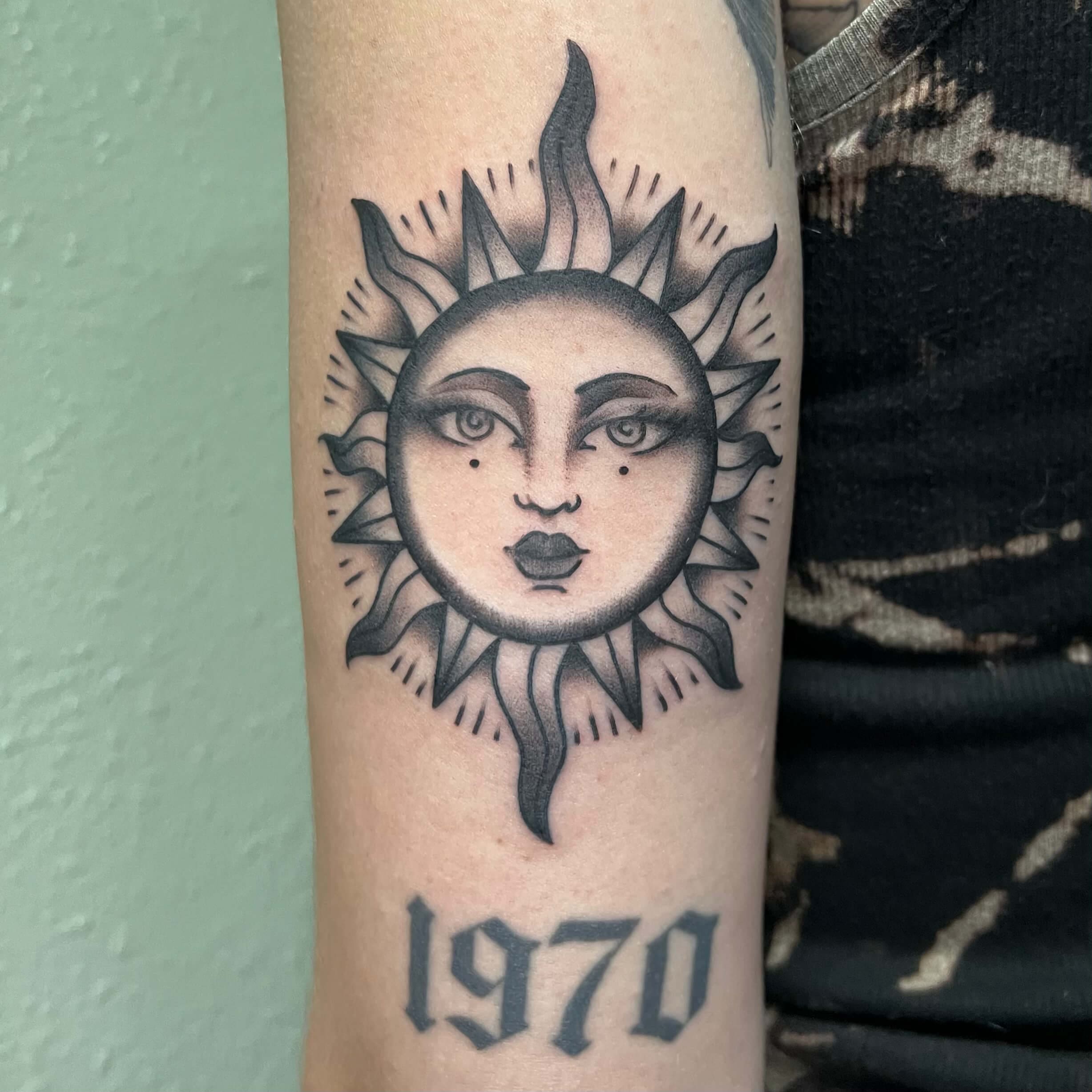
Tattoo pain depends on more than the body part being tattooed. Skin thickness, nerve sensitivity, bone proximity, movement, tattoo size, technique, and session length all influence how the experience feels.
A tattoo pain chart can help compare placements, but it cannot predict an exact pain level. Use the ratings as general guidance rather than a guarantee.
Key Takeaways
- Fleshy areas with thicker skin and more muscle or fat are often easier to tolerate.
- Bony, thin-skinned, highly mobile, and sensitive areas usually feel more intense.
- Pain can increase as the session continues and the skin becomes tender.
- Large or heavily saturated designs may hurt more than simple linework in the same placement.
- Sleep, food, anxiety, positioning, and individual sensitivity affect the experience.
- Placement should support the design, not simply offer the lowest pain score.
How to Read the Tattoo Pain Scale
The chart uses a scale from 1 to 10. Lower numbers represent areas commonly described as more manageable, while higher numbers identify placements that many clients find more intense.
Individual experiences vary widely. A placement that feels like a 4 to one client could feel like a 7 to another.
| Pain range | General experience |
| 1 to 3 | Mild to moderate discomfort |
| 4 to 6 | Noticeable pain that may become tiring |
| 7 to 8 | Intense discomfort that may require breaks |
| 9 to 10 | Frequently described as among the hardest placements |
Tattoo Pain Chart by Body Part
| Body area | Estimated pain range | Why it may feel this way |
| Outer upper arm | 2 to 4 | Muscle, thicker skin, and limited bone contact |
| Outer shoulder | 3 to 5 | Good padding with some sensitivity near the shoulder cap |
| Forearm | 3 to 5 | Stable positioning and moderate skin thickness |
| Outer thigh | 3 to 5 | Broad surface with muscle and soft tissue |
| Calf | 4 to 6 | Muscle coverage with more sensitivity near the shin |
| Upper back | 4 to 6 | Broad muscle coverage with sharper areas near bone |
| Inner upper arm | 5 to 7 | Softer and more sensitive skin |
| Chest | 5 to 8 | Pain rises near the sternum, collarbone, and nipples |
| Stomach | 5 to 8 | Movement, soft tissue, and variable skin tension |
| Elbow | 7 to 9 | Bone proximity and difficult skin texture |
| Knee | 7 to 9 | Thin skin, joint movement, and bone |
| Spine | 7 to 9 | Limited padding over the vertebrae |
| Foot and ankle | 7 to 9 | Small bones, tendons, and thin skin |
| Hand and fingers | 7 to 9 | Bones, joints, movement, and limited padding |
| Ribs | 8 to 10 | Thin skin over bone and movement from breathing |
| Neck and throat | 8 to 10 | Sensitive skin, movement, and vulnerable positioning |
| Armpit | 9 to 10 | Highly sensitive skin and dense nerve supply |
Arms and Shoulders
The outer upper arm is often considered one of the more manageable placements. Muscle and soft tissue provide padding, and the client can usually maintain a stable position.
The outer shoulder also tends to fall within a lower-to-moderate range. Pain may increase as the tattoo approaches the collarbone, shoulder blade, chest, or armpit.
Forearm tattoos are generally manageable, especially on the outer surface. The inner wrist, elbow crease, and bony edge of the forearm can feel noticeably sharper.
The inner upper arm is more sensitive because the skin is softer and receives less regular contact. Discomfort often increases as the design moves toward the armpit.
Chest, Ribs, and Stomach
Chest tattoo pain varies by exact location. The upper pectoral area may feel moderate, while the sternum, collarbone, and nipple region are usually more intense.
Rib tattoos regularly appear near the top of pain charts. Thin skin, limited padding, and constant movement from breathing can make the placement difficult during long sessions.
The stomach can feel sharp, burning, or difficult to stabilize. Pain may increase near the ribs, hip bones, sides, and navel.
Torso tattoos may also require uncomfortable positioning. Remaining still while breathing naturally can add to the difficulty.
Back and Spine
The upper back often produces moderate discomfort because it has a broad surface and some muscle coverage. Areas directly over the shoulder blades or close to the spine can feel sharper.
Lower-back pain varies according to body composition and proximity to the pelvis or vertebrae. Fleshier sections may be easier than bony areas.
Tattooing directly over the spine often creates strong vibration in addition to pain. Large back pieces can also become difficult because of session length, even when some sections are relatively manageable.
Thighs, Calves, Knees, and Feet
The outer thigh is frequently recommended for clients concerned about pain. It offers a broad surface with muscle and soft tissue.
The inner thigh is usually more sensitive, particularly near the groin or back of the leg. The skin is softer and may react more strongly to repeated passes.
Calf tattoos tend to fall within a moderate range. Pain increases near the shin, ankle, and back of the knee.
The kneecap and knee ditch are often difficult placements. One sits directly over bone, while the other has soft, sensitive skin that moves with the joint.
Feet and ankles usually rank high because of thin skin, small bones, tendons, and limited padding. These areas can also be difficult to keep still.
Hands, Wrists, and Fingers
The outer wrist may be manageable, but the inner wrist and bony edges usually feel more intense. The area contains thin skin and several sensitive structures.
Hands and fingers often hurt more than their small size suggests. The bones and joints sit close to the surface, and the artist may need to work slowly across a compact area.
These placements also experience frequent movement, washing, sunlight, and friction. Pain is only one concern when deciding whether they suit the design.
Neck, Head, and Face
The side and back of the neck can feel intense, especially near the spine, jaw, or hairline. Machine vibration may also feel stronger because the work is close to the head.
The throat is commonly considered one of the most difficult placements. Thin skin, swallowing, breathing, and the vulnerable position contribute to the experience.
Scalp tattoos may produce sharp sensations and strong vibration against the skull. Sensitivity can vary between the top, sides, hairline, and back of the head.
Face tattoos require additional consideration beyond pain. Visibility, professional consequences, limited correction options, and social impact should be assessed carefully.
Why Pain Changes Within the Same Placement
A body area is rarely uniform. A forearm tattoo may begin on a fleshy outer surface and move toward a sensitive wrist or elbow.
Tattoo technique also affects the sensation. Linework may feel sharp and concentrated, while shading often feels broader, hotter, or more abrasive.
Solid black and color packing may require several controlled passes. The area can become increasingly tender as saturation is built.
Session length can eventually matter more than the original placement rating. A moderate area may become difficult after several hours of tattooing, wiping, swelling, and muscle fatigue.
Factors That Can Make Tattoo Pain Feel Stronger
| Factor | Possible effect |
| Poor sleep | Makes a long session harder to tolerate |
| Hunger | May contribute to weakness or poor concentration |
| Anxiety | Increases anticipation and muscle tension |
| Unstable positioning | Adds cramping and repeated adjustments |
| Large tattoo | Extends the duration of discomfort |
| Heavy saturation | Requires more work in the same area |
| Illness or fatigue | Reduces physical comfort |
| Scar tissue | May create uneven or unpredictable sensitivity |
Pain tolerance remains personal, but preparation gives you a better starting point. Arrive rested, fed, normally hydrated, and ready to communicate.
Frequently Asked Questions
Can one side of the body hurt more than the other?
Some clients notice differences because of previous injuries, muscle use, positioning, or individual sensitivity. There is no universal rule that one side always hurts more.
Does tattooing over scar tissue hurt more?
Scar tissue can have reduced, increased, or irregular sensation. The artist should assess whether the scar is mature and suitable for tattooing before planning the design.
Do color tattoos hurt more than black and grey tattoos?
Color itself is not automatically more painful. Discomfort depends more on saturation, repeated passes, technique, and how long the artist works over the same area.
Does tattoo pain change as you get older?
Skin condition, health, medication, and personal sensitivity may change over time. Age alone does not reliably determine whether a tattoo will feel more or less painful.
Choose the Placement First, Then Prepare for the Pain
Pain charts are useful for comparing general placement tendencies. Fleshier outer areas are often easier, while ribs, joints, hands, feet, the spine, and sensitive folds usually feel more intense.
The exact experience still depends on the artwork, session length, technique, and how you feel on the appointment day. Use the chart to prepare rather than treating its numbers as a fixed prediction.
Tattoo pain ends when the session does, but placement affects the artwork for years. Choose the body area that supports the design, then plan realistically for the discomfort involved.