
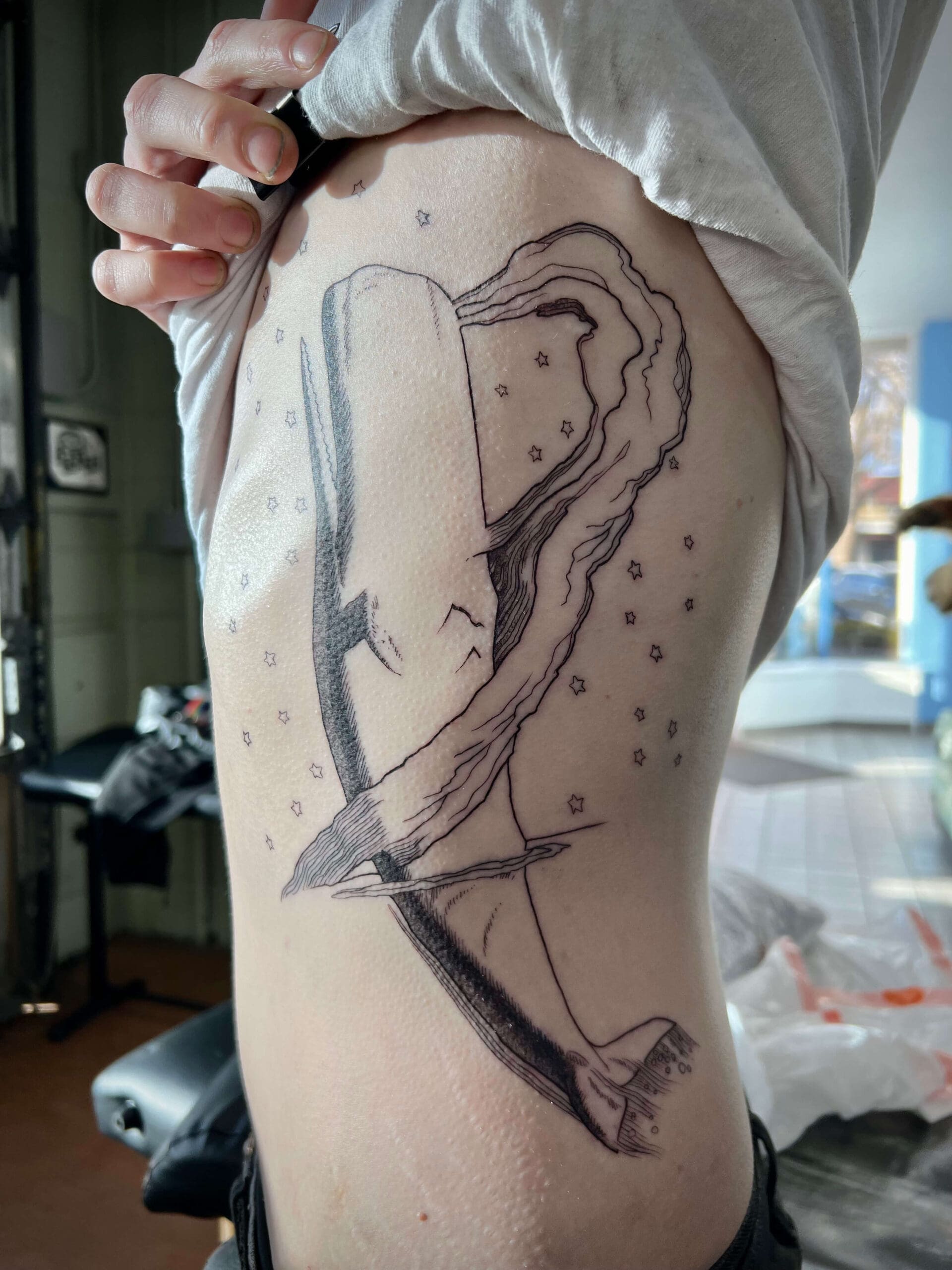
Ribcage tattoos can hold large floral arrangements, lettering, animals, ornamental designs, and compositions that follow the natural curve of the torso. The placement also has a reputation for being difficult because the skin is relatively close to the ribs and moves continuously with breathing.
Pain and healing vary by person, but planning for positioning, clothing friction, sleep, exercise, and limited access to the area can make the experience more manageable. A fresh tattoo is an open wound, so careful aftercare and early attention to unusual symptoms are essential.
Key Takeaways
- Ribcage tattoos are often more intense over the bones and toward the sternum or side of the torso.
- Breathing and body movement can make long sessions tiring even when the client remains still.
- Large rib designs may be easier to complete across several appointments.
- Loose clothing helps limit friction during early healing.
- Sleeping, exercise, sweating, and stretching may need temporary adjustment.
- Spreading redness, increasing warmth, pus, fever, or worsening pain should be assessed medically.
Why Ribcage Tattoos Can Feel More Painful
The ribcage has less cushioning over the bones than areas such as the outer thigh or upper arm. Tattooing directly over a rib may create a sharp, vibrating, or scratching sensation that feels different from work over softer tissue.
The surrounding areas do not all feel the same. The side of the torso may be easier for some people than the sternum, lower ribs, or areas closer to the armpit.
Pain can also change throughout the session. Outlining may feel sharper, while repeated shading or color packing can become more uncomfortable as the skin grows irritated.
Individual experience depends on anatomy, stress, sleep, session length, tattoo technique, and personal pain response. A painful experience reported by one client does not predict exactly how another person will feel.
How Breathing Affects the Tattoo Session
The ribcage moves with every breath. The artist must work with this movement while maintaining consistent lines, spacing, and shading.
Clients should breathe normally unless the artist gives a brief instruction during a difficult line. Holding the breath repeatedly can create tension and make the session harder to sustain.
Slow, steady breathing may help the client remain relaxed. Sudden deep breaths, twisting, laughing, or coughing can interrupt the artist’s movement.
The tattoo should be designed with normal breathing in mind. A stencil that looks balanced only when the client takes a deep breath may shift when the torso returns to a relaxed position.
Ribcage Tattoo Pain by Area
Different parts of the rib and side torso create different physical and visual challenges.
| Ribcage Area | Common Experience | Design Consideration |
| Upper ribs | Sensitive near the armpit and chest | Allow room for shoulder movement |
| Side ribs | Strong vibration over bone | Follow the vertical curve of the torso |
| Lower ribs | Sensitive near the waist | Consider bending and clothing pressure |
| Sternum side | Often intense over central bone | Avoid compressing detailed symmetry |
| Back ribs | May be easier in fleshier areas | Connect naturally with back tattoos |
| Under-breast area | Friction and anatomy vary | Plan around clothing and body movement |
This table describes common tendencies rather than a guaranteed pain scale. The same person may find one section manageable and another unexpectedly intense.
Choosing a Design That Fits the Ribcage
The ribcage suits elongated designs because the available area runs vertically between the armpit, waist, chest, and back. Flowers, branches, snakes, feathers, daggers, script, birds, and flowing ornamental designs can follow this direction.
Wide designs may wrap from the side toward the stomach or back. These compositions need careful stencil planning because the entire tattoo cannot be viewed from one angle.
The artist should evaluate the design while the client stands naturally. Twisting the torso to inspect the stencil can distort the area and create a misleading view of the final placement.
Faces, circles, and rigid geometric forms require extra planning. The body’s curve may make them appear stretched or compressed from certain angles.
Session Length and Splitting the Tattoo
A small rib tattoo may be completed in one appointment, while a large floral panel, animal, scene, or ornamental composition may require several sessions.
Dividing the project can reduce fatigue and limit how much irritated skin must be worked at once. The artist may separate outlining, shading, background, and color into different appointments.
Longer sessions are not automatically more efficient. Muscle tension, swelling, sensitivity, and difficulty maintaining one position can affect both the client and the artist.
The session should stop when the skin or client can no longer support clean, controlled work. Finishing quickly should not take priority over the tattoo’s quality or healing.
How to Prepare for a Ribcage Tattoo Appointment
Eat a normal meal before the appointment and arrive adequately hydrated. Fatigue, hunger, and dehydration can make a demanding session feel harder.
Wear clothing that provides access to the area without requiring unnecessary exposure. A loose button-up shirt, zip jacket, soft robe, or adjustable top may work depending on the exact placement.
Avoid wearing tight waistbands, stiff bras, compression clothing, or rough fabric directly over the planned area. The studio may provide coverings or positioning options to protect privacy.
Tell the artist about scars, skin conditions, recent illness, medication concerns, or previous reactions that may affect the appointment. Clients with medical conditions that influence healing or immunity should discuss tattooing with an appropriate healthcare professional.
Positioning During the Session
The artist may ask the client to lie on their side, lie partly on their back, raise one arm, or stretch the torso. The position depends on whether the tattoo sits on the front, side, or back ribs.
Maintaining this posture can create shoulder, neck, hip, or lower-back discomfort. These issues may become tiring before the tattooed skin reaches the client’s pain limit.
Short breaks allow the client to change position, drink water, eat, and release muscle tension. Standing too quickly after a long session may cause light-headedness, so movement should be gradual.
The client should communicate numbness, cramping, dizziness, nausea, or difficulty breathing rather than trying to remain silent.
What Ribcage Tattoo Healing Usually Looks Like
A fresh tattoo may initially appear red, tender, swollen, or slightly shiny. Light fluid or ink residue may collect beneath certain adhesive bandages during the early period.
Dryness, mild itching, and peeling can develop as the outer skin heals. The tattoo may briefly look dull or cloudy before the surface settles.
These changes should gradually improve rather than become more severe. Persistent inflammation, worsening pain, increasing heat, nodules, or other continuing skin problems require attention because tattoo-related infections and reactions can occur.
Healing time varies with the tattoo’s size, saturation, location, skin response, and aftercare. The surface may appear healed before deeper tissue has fully settled.
Common Ribcage Tattoo Mistakes
One mistake is choosing the design from a flat image without checking how it follows the torso. The stencil must be evaluated from the front, side, and back while the body is relaxed.
Another problem is making lettering too small. The ribs curve and move, so tight script and narrow spacing may become difficult to read.
Clients may also underestimate clothing friction. A tattoo positioned directly beneath a bra band, waistband, or uniform seam can be repeatedly irritated during healing.
Scheduling a long session immediately before travel, swimming, sports, or an event can make aftercare difficult. The tattoo should be booked when the client can control clothing, activity, and sleeping conditions.
Frequently Asked Questions
Can a ribcage tattoo be extended onto the stomach later?
Yes. Flowers, snakes, ornament, smoke, water, and other directional elements can connect the ribs with the stomach.
The original design should leave a usable transition rather than ending with a hard border.
Can rib tattoos change during pregnancy?
Pregnancy can stretch the skin around the ribs, stomach, chest, and waist. The amount of change depends on the tattoo’s location and the person’s body.
Can a ribcage tattoo be placed over stretch marks?
Some stretch marks can be tattooed after they have matured and stabilized. Their texture, color, width, and sensitivity may affect how they accept pigment.
The artist should examine the area in person before approving the design.
Can numbing cream be used for a rib tattoo?
Some artists permit certain numbing products, while others do not because they may affect the skin or session. The client should ask before applying anything.
Do not arrive with an unapproved product already covering the tattoo area.
Plan for the Movement, Not Only the Pain
Ribcage tattoo pain is only one part of the placement. Breathing, posture, clothing, sleep, stretching, and access to the area can affect both the session and healing period.
Choose a design that follows the torso’s natural direction and remains clear as the body bends and rotates. Plan the appointment around clothing, exercise, travel, and enough time for careful aftercare.
The ribcage can hold a powerful, flowing composition when the artist works with its movement. Preparation and patient healing matter as much as enduring the session.