
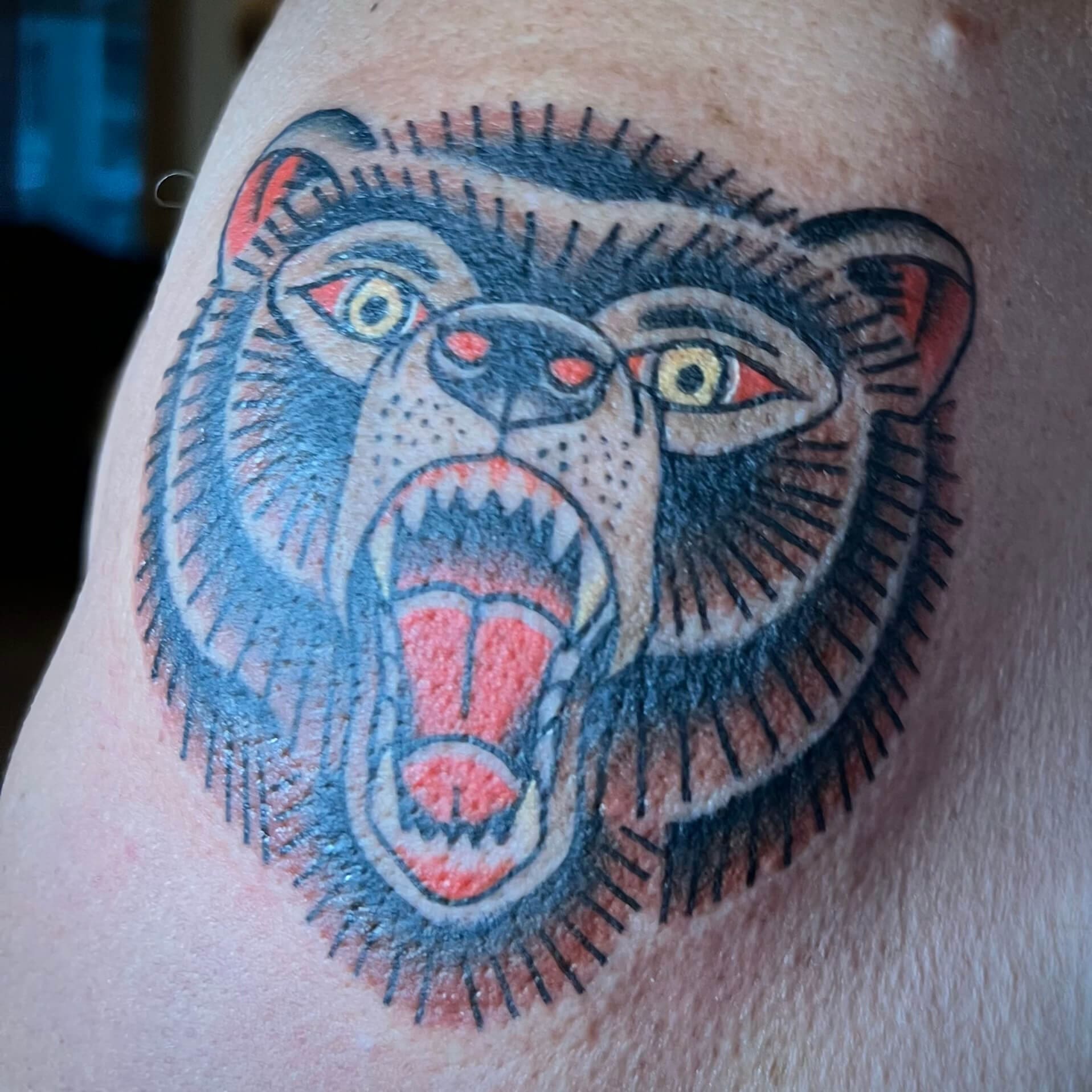
A successful tattoo cover-up does more than place a new image over old ink. The replacement design must control where the eye looks, incorporate or conceal the darkest parts of the existing tattoo, and create enough contrast to remain readable after healing.
Some tattoos can be covered directly, while others benefit from reworking, partial laser fading, or a completely different design direction. The best approach depends on the old tattoo’s size, darkness, placement, scarring, and remaining negative space.
Key Takeaways
- Cover-up tattoos usually require more design flexibility than tattoos placed on clear skin.
- The new design may need to be larger than the original tattoo.
- Existing dark areas must be incorporated into equally dark or visually dominant sections.
- Texture, shading, and natural shapes can disguise old lines more effectively than large flat areas.
- Raised, painful, itchy, or inflamed tattoos should be medically assessed before more ink is added.
- Partial laser fading can create more design options when the original tattoo is too dark or dense.
Start With an Honest Assessment of the Existing Tattoo
The artist needs to see the tattoo clearly before recommending a design. Photographs can begin the conversation, but an in-person consultation may be necessary when the tattoo contains scarring, uneven texture, heavy saturation, or pigment migration.
The assessment should consider:
| Existing tattoo factor | Why it matters |
| Overall size | Determines how much space the new composition may require |
| Darkest sections | Limits where lighter details can be placed |
| Line density | Affects how much texture or shading is needed |
| Color saturation | Influences the replacement palette |
| Placement | Controls how far the new design can expand |
| Scarring | May affect application and healing |
| Age of the tattoo | Older work may be softer or more faded |
| Negative space | Provides clearer areas for new details |
Do not hide the tattoo beneath makeup or use heavily edited photographs during the consultation. The artist needs an accurate view of its darkest values, true colors, and skin texture.
A Cover-Up Is Different From a Touch-Up or Rework
A touch-up reinforces parts of an existing tattoo that healed lightly or lost small areas of pigment. It is intended to preserve the original design.
A rework improves or expands the original tattoo while allowing recognizable parts of it to remain. The artist might strengthen outlines, adjust shapes, add background elements, or improve contrast.
A cover-up is designed to make the unwanted tattoo difficult to identify within a different composition. Some original marks may remain underneath, but they should no longer control what the viewer sees.
| Service | Primary goal |
| Touch-up | Restore small areas of the existing tattoo |
| Rework | Improve the original concept |
| Blast-over | Place a visible new design over old work without fully hiding it |
| Cover-up | Conceal the old tattoo within a new composition |
| Laser fading | Reduce old pigment before redesigning the area |
Choosing the wrong approach can lead to unnecessary size, darkness, and cost. A faded tattoo with a good underlying concept may need reworking rather than complete concealment.
Why the New Tattoo Often Needs to Be Larger
A cover-up design usually needs to extend beyond the boundaries of the old tattoo. This gives the artist clean skin where new focal points, outlines, and readable details can be established.
A replacement design that follows the exact dimensions of the old tattoo has less room to redirect attention. The existing outer edges may remain visible or create an unnatural shape inside the new piece.
The cover-up does not always need to be dramatically larger. The required expansion depends on the original tattoo’s darkness, shape, and location.
For example, a small faded name may fit inside a moderately larger flower. A dense black symbol may require a broader composition with leaves, shadows, ornamental shapes, or background elements extending around it.
Dark Ink Cannot Simply Be Painted Over
Tattooing is not the same as applying opaque paint to a wall. New pigment enters the same skin containing the older tattoo, so the old and new colors can remain visually connected.
Placing pale yellow, white, or skin-colored pigment directly over a dark black tattoo will not create a reliably blank surface. The underlying value may still show through after the new tattoo settles.
Dark sections of the original tattoo usually need to become dark sections of the replacement design. They may be incorporated into shadows, black areas, outlines, hair, feathers, leaves, scales, fabric folds, or another visually appropriate feature.
The FDA notes that tattoos can fade or blur over time and that pigment placed too deeply may migrate beyond its original location. These conditions can make precise concealment more complicated.
Choose Subjects With Natural Texture and Value Variation
Designs with a mixture of dark shadows, medium values, texture, and open areas generally give the artist more ways to disguise unwanted lines.
Useful subjects can include:
- Flowers with overlapping petals and leaves
- Animals with fur, feathers, scales, or patterned markings
- Dark ornamental designs
- Japanese-inspired waves, clouds, wind bars, or flowers
- Black and grey illustrative compositions
- Botanical arrangements
- Mythological or fantasy subjects
- Abstract blackwork
- Textured landscapes
The subject should still suit the client’s interests and the artist’s specialty. Choosing a design only because it can hide the old tattoo may lead to a second piece that the client eventually dislikes.
Smooth minimalist designs, delicate single-line tattoos, pale watercolor effects, and large areas of empty skin provide fewer concealment options. They may still work when the original tattoo is small and heavily faded, but they are less adaptable for dense black work.
Color Options Depend on the Existing Pigment
A color cover-up is possible, but the palette is influenced by what is already in the skin. Dark blues, greens, purples, browns, reds, and black may provide stronger coverage than pale or translucent colors.
The new tattoo does not need to be entirely dark. Strategic black and deep color can control the old pigment while brighter sections are placed on surrounding clear skin.
| Existing condition | Possible design response |
| Faded black lines | Medium and dark shading may conceal them |
| Dense black fill | Incorporate into solid black or deep shadow |
| Old blue or green | Use deeper cool colors or black structure |
| Faded warm colors | Cover with stronger values and textured color |
| Uneven patchy ink | Use layered shading and irregular organic forms |
| Multiple old colors | Build a broader palette with strong contrast anchors |
The artist should have healed examples demonstrating how their color cover-ups settle. Fresh photographs can look more opaque than the final healed tattoo.
Placement Determines How Far the Design Can Expand
Some body areas provide room to build a larger composition around the original tattoo. Thighs, upper arms, backs, chests, and calves often allow the artist to extend the design while maintaining natural flow.
Hands, fingers, wrists, ankles, necks, and small joint areas provide less space. Expansion may cross into a more visible location or interfere with nearby tattoos.
The artist should evaluate the design while the body is in a natural position. A cover-up that looks balanced on a flat digital mock-up may distort when wrapped around an arm, leg, shoulder, or rib area.
Consider whether you are willing to accept the larger footprint before approving the concept. A successful cover-up may require changing both the size and visibility of the tattoo.
Frequently Asked Questions
Can lettering be covered without making the tattoo extremely dark?
Sometimes. Faded or thin lettering may fit inside textured shading, petals, feathers, or another patterned area. Thick black lettering usually requires stronger values or laser fading.
Can an unfinished tattoo be covered immediately?
It should be allowed to heal before the artist evaluates and tattoos the area again. Working over an open, peeling, or inflamed tattoo can increase trauma and make the final result unpredictable.
Will the original tattoo become visible again after several years?
Parts of the old design may become more noticeable as the cover-up softens or fades. Strong composition and adequate saturation can reduce this risk, but no artist can promise permanent invisibility under every condition.
Can a second cover-up be placed over an earlier cover-up?
Possibly, but multiple layers reduce design flexibility and may require a larger, darker, or more complex piece. Partial laser fading may be recommended before adding another layer.
Build a New Design Instead of Hiding the Past at Any Cost
A successful cover-up should look like a complete tattoo, not a collection of dark shapes placed over an unwanted image. It needs a clear subject, deliberate composition, balanced values, and enough space to remain readable.
Be flexible about size, color, and placement, but do not accept a new design you would not choose on its own. Ask how the old tattoo will be incorporated and review healed examples before committing.
When direct coverage would create an overly dark or oversized result, reworking or professional laser fading may provide a better foundation. The goal is not simply to make the original tattoo disappear. It is to replace it with artwork that fits the body and remains visually convincing after healing.