
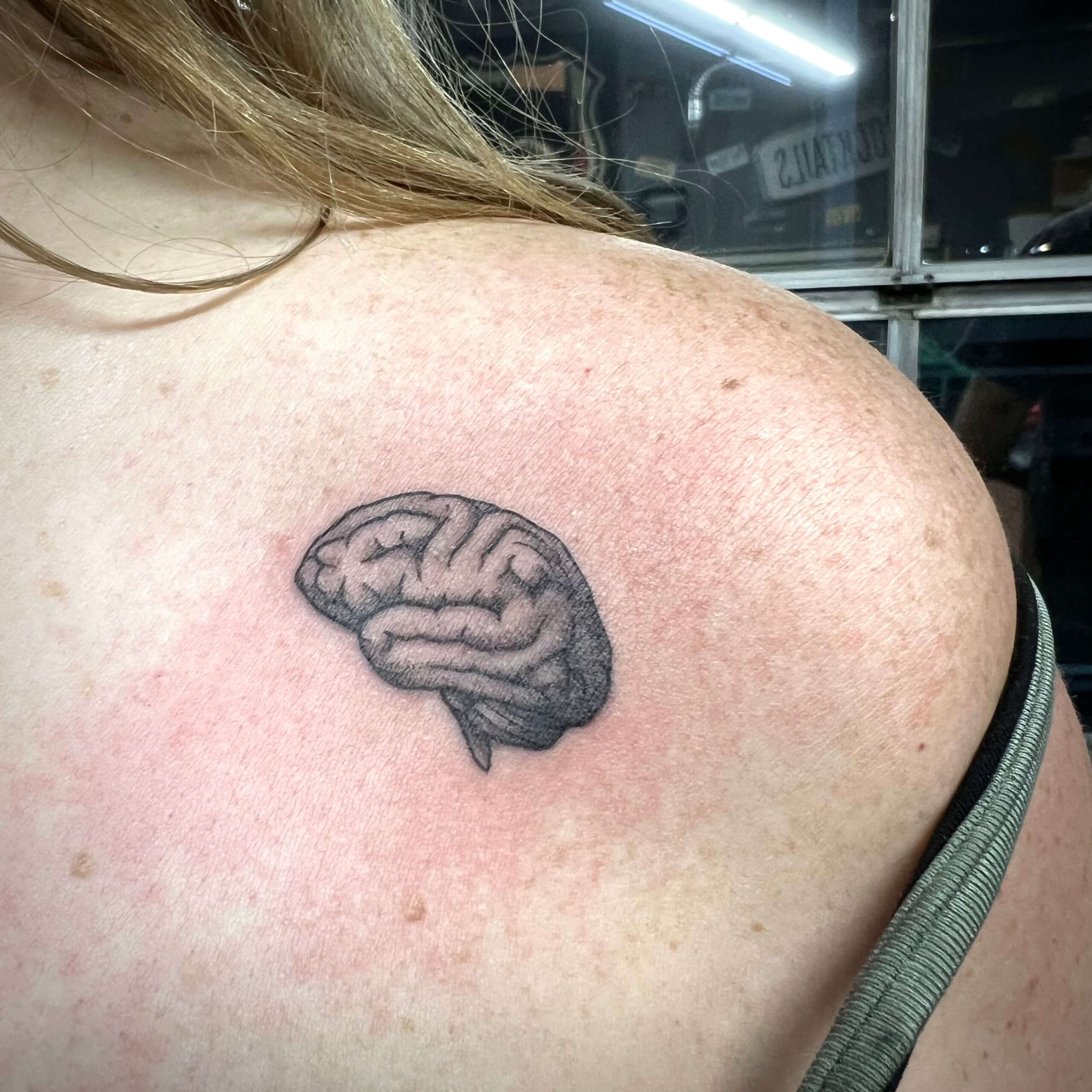
A chest tattoo can create a strong central composition, connect both sides of the upper body, or extend naturally into the shoulders, arms, ribs, and neck. The area can support symmetrical ornament, portraits, animals, lettering, religious imagery, botanical work, and large Japanese-inspired designs.
The chest is not a flat canvas. The sternum, collarbones, pectoral muscles, breasts, ribs, and shoulder movement all affect how the tattoo sits and changes with posture.
Key Takeaways
- Decide whether the tattoo should be centered, one-sided, or spread across the full chest.
- Symmetrical designs must be adjusted to the wearer’s actual anatomy.
- Important faces, text, and geometric details should avoid areas that distort heavily with movement.
- Sternum, collarbone, and rib areas may feel more intense than fleshier chest sections.
- Clothing, work, exercise, sleep, and future body changes can affect placement and healing.
- Plan transitions early when the tattoo may later connect with sleeves, shoulders, ribs, or the neck.
Why the Chest Works for Large Tattoo Designs
The chest provides a broad surface for designs that need width, visual authority, and a clear central focus. It can hold one large subject or several connected elements without forcing them into a narrow shape.
The area is especially effective for wings, paired animals, ornamental patterns, family imagery, religious subjects, lettering, flowers, masks, and mythological figures.
Chest tattoos can also feel personal because they are usually covered during daily life. The wearer controls when the artwork becomes visible.
The main challenge is movement. Breathing, arm position, posture, muscle contraction, and changes in body composition can alter how the tattoo appears.
Choose Between Centered, One-Sided, and Full-Chest Placement
The first major decision is how much of the chest the design should occupy. A centered sternum tattoo, one-sided pec piece, and full chest panel create different visual effects.
A centered design draws attention to the body’s midline. It suits ornamental work, vertical symbols, flowers, daggers, moths, sacred imagery, and balanced geometric compositions.
One-sided chest tattoos feel more dynamic and leave space for future work. They can connect naturally with the shoulder and upper arm.
A full-chest tattoo creates the strongest visual impact. It can use symmetry, mirrored figures, wide wings, large lettering, or a narrative scene extending across both sides.
| Chest Placement | Main Strength | Main Limitation | Suitable Designs |
| Sternum | Strong central focus | High movement and sensitivity | Ornament, flowers, vertical symbols |
| One pec | Flexible and expandable | Can feel unbalanced if poorly placed | Portraits, animals, religious imagery |
| Both pecs | Broad visual structure | Requires careful balance | Paired figures, lettering, wings |
| Upper chest | Connects with shoulders and neck | High visibility in open clothing | Script, birds, ornamental borders |
| Lower chest | More private placement | Moves with breathing and ribs | Botanical work, snakes, flowing imagery |
| Full chest | Large connected composition | Longer sessions and greater commitment | Narrative scenes and large panels |
The tattoo should look intentional even if it remains unfinished for several months. A one-sided piece should not appear like half of a symmetrical design unless expansion is already planned.
Use the Sternum as a Visual Anchor
The sternum creates a natural central line that can organize the design. Symmetrical tattoos may mirror across it, while vertical subjects can follow it from the collarbones toward the upper abdomen.
Flowers, blades, insects, sacred symbols, chandeliers, and ornamental designs suit this structure. The artist can use the sternum to establish balance without forcing every detail to match perfectly.
The center line should be checked while the wearer stands naturally. Posture, shoulder height, breast shape, and rib structure may make a mathematically perfect digital design look uneven on the body.
The artist may need to shift small elements so the tattoo appears balanced when viewed from the front.
Understand Symmetry on a Moving Body
Symmetrical chest tattoos create order, stability, and visual authority. They work well for wings, paired animals, ornamental designs, lettering, and guardian figures.
Human bodies are rarely perfectly symmetrical. One shoulder may sit higher, one side of the chest may have more muscle, or the ribcage may rotate slightly.
A skilled artist designs for visual balance rather than exact measurement. Small differences in angle, scale, or spacing may be necessary for the tattoo to appear symmetrical.
The stencil should be checked with the arms relaxed. Raising the arms or pulling the shoulders back can temporarily change the chest shape and create a misleading impression.
Plan Around the Pectoral Muscles
Pectoral muscles provide a broad surface for animals, portraits, masks, flowers, and illustrative subjects. The upper and outer chest also connect naturally with the shoulder cap.
The design should follow the muscle rather than ignore it. Curved wings, animal bodies, branches, and ornamental borders can use the pec’s rounded shape to create movement.
Faces and highly symmetrical details should sit on the most stable area available. Placing eyes or mouths across a strong muscle edge may cause visible distortion when the wearer moves.
People who train the chest heavily should consider how the design may change with substantial muscle gain or loss. Moderate changes may not ruin the tattoo, but large changes can alter proportions.
Consider Breast and Under-Breast Placement
Chest anatomy varies widely, and designs should be planned around the wearer’s actual body rather than a standard template.
Under-breast tattoos often use ornamental lines, flowers, leaves, mandalas, snakes, or decorative framing that follows the lower curve. These designs may be centered or extend toward the ribs.
Tattoos placed across or beside breast tissue can change with movement, clothing, pregnancy, weight fluctuation, surgery, or aging. The artist should explain how the design may respond to these changes.
Clients planning tattoos after breast surgery or reconstruction should work with an artist experienced in altered tissue and obtain appropriate medical clearance when necessary.
Match the Design Direction to the Body
Chest tattoos can move horizontally, vertically, diagonally, or outward toward the arms. The best direction depends on the subject and whether future extensions are planned.
Wide wings, lettering, and paired figures naturally move across the upper chest. Daggers, flowers, insects, and ornamental designs can follow the sternum vertically.
Dragons, snakes, branches, smoke, and Japanese background elements may move diagonally between the chest, shoulder, and ribs.
The subject should appear to move with purpose. Random directional changes can make a large design feel divided into unrelated sections.
Plan Lettering Carefully
The chest provides enough width for names, quotes, memorial phrases, and large script. Lettering may sit across the collarbones, above the pecs, under the collarbone line, or within a larger composition.
Text should follow a gentle curve when necessary rather than being forced into a rigid straight line over a rounded chest.
Long phrases need enough letter height and spacing. Compressing a sentence across the chest can make the words difficult to read as the lines settle.
The spelling, punctuation, translation, and direction should be checked before tattooing. Curved lettering can make alignment errors harder to notice in the stencil.
Frequently Asked Questions
Can a chest tattoo be designed around a pacemaker or medical device?
Possibly, but the artist should not tattoo directly over or near a medical device without appropriate medical guidance.
The design may need to be repositioned to avoid the implant site and any related scar tissue.
Can chest hair affect the appearance of a tattoo?
Chest hair can partially cover fine details or reduce contrast when it grows back. The tattoo remains in the skin, but the visible result may change depending on hair density.
Clients can consider bolder designs or regular grooming if visibility matters.
Can nipple placement be incorporated into the design?
Yes. The nipples can remain outside the artwork, become part of a symmetrical composition, or be surrounded by ornamental or botanical elements.
The artist should discuss the plan clearly before stenciling because the area may be sensitive and visually prominent.
Can a chest tattoo be reworked after major weight loss?
Often, but the options depend on skin elasticity, tattoo distortion, placement, and the amount of change.
An artist may adjust the outline, add background elements, or expand the composition to restore balance.
Design the Chest Tattoo for the Body You Actually Have
A successful chest tattoo should follow the wearer’s anatomy rather than imitate a flat reference. The sternum, pecs, collarbones, breasts, ribs, and shoulders all influence how the artwork sits and moves.
Centered designs benefit from careful visual balance, while one-sided pieces need strong placement and future transition planning. Full-chest work requires enough scale, negative space, and hierarchy to remain readable.
Check the stencil with the body relaxed, consider how clothing and movement affect visibility, and plan future extensions before filling every available area. A strong chest tattoo should look integrated with the upper body rather than simply placed on top of it.