Coil and rotary tattoo machines perform the same basic job, but they create needle movement through different mechanical systems. Coil machines use electromagnetic coils and an armature bar, while rotary machines use an electric motor and a mechanism that converts rotation into repeated linear motion.
Neither format is automatically better. The practical difference comes from how the machine delivers force, responds to skin resistance, balances in the hand, and fits the artist’s workflow.
Key Takeaways
- Coil machines use electromagnets, springs, and an armature bar.
- Rotary machines use a motor and cam, crank, or related drive system.
- Coil machines usually produce more mechanical sound and vibration.
- Modern rotary machines are often quieter and available in pen-style formats.
- Stroke, give, needle grouping, and hand speed matter more than the category alone.
- Both formats can produce professional lining, shading, and color.
Coil vs Rotary Tattoo Machines at a Glance
| Feature | Coil machine | Rotary machine |
| Drive system | Electromagnetic coils and armature bar | Electric motor and motion converter |
| Sound | Distinct buzzing or chattering | Usually quieter |
| Vibration | Often more noticeable | Commonly lower |
| Balance | Frame-heavy with exposed components | Often compact or pen-shaped |
| Adjustment | Springs, contact screw, armature, voltage | Stroke, voltage, give, motor mode |
| Common workflow | Separate liner and shader setups | One all-rounder or several stroke options |
| Needle system | Needle bars or compatible cartridges | Frequently cartridge-based |
How a Coil Tattoo Machine Works
A traditional coil machine uses electromagnetic coils mounted to a frame. When energized, the coils attract an armature bar, which moves the attached needle bar. Springs and the contact system repeatedly interrupt and restore the circuit, creating reciprocating needle movement.
This exposed mechanical system gives the artist several tuning points. Spring tension, armature weight, contact gap, coil configuration, and voltage can change speed and how firmly the machine strikes.
Coil machines are often configured for a specific role. A liner and shader may use different spring tension, timing, and working rhythm even when their frames look similar.
How a Rotary Tattoo Machine Works
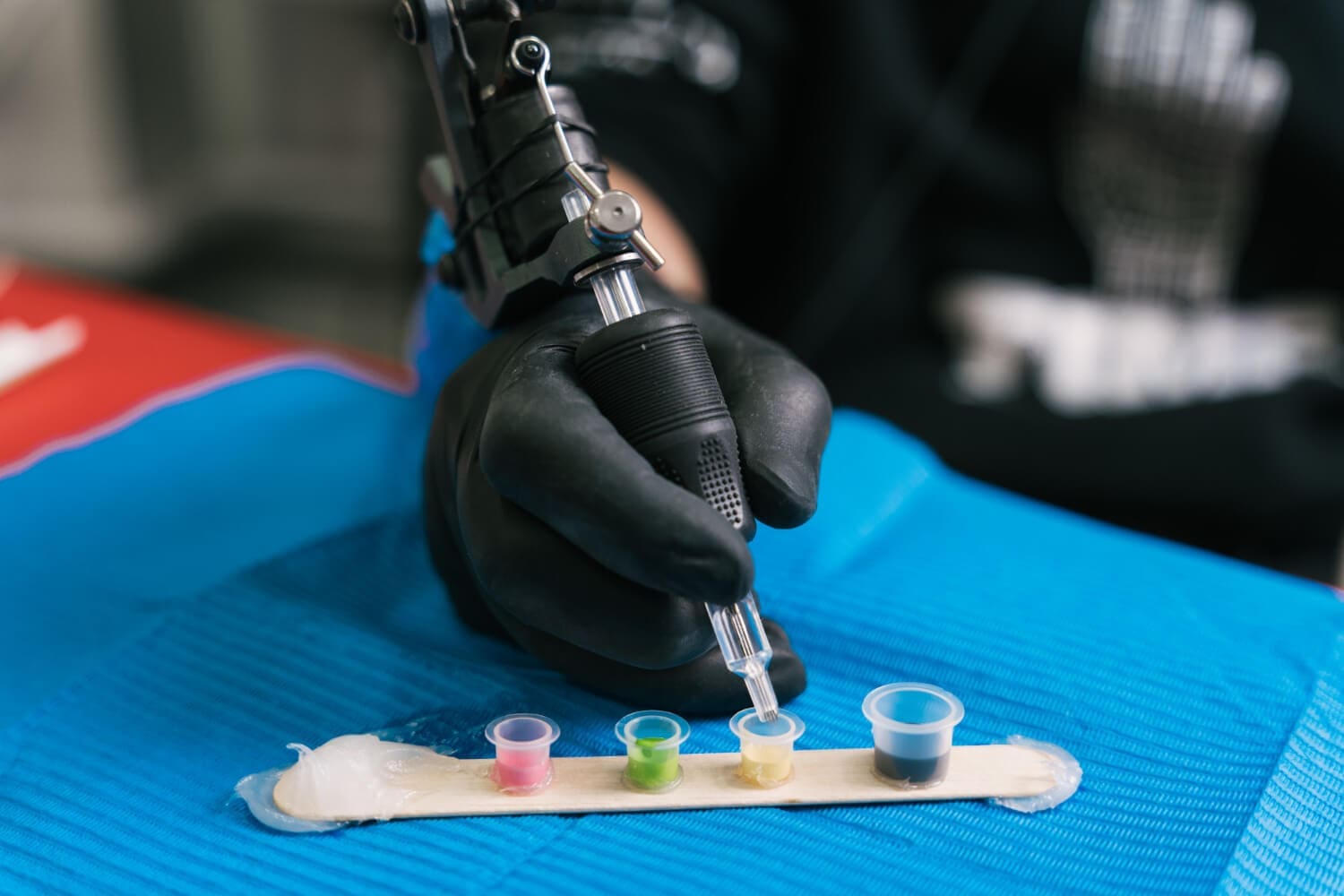
A rotary machine uses an electric motor rather than an electromagnetic contact system. The motor turns a cam, crank, or eccentric mechanism that converts rotary movement into repeated forward-and-back needle motion.
Modern rotary designs include framed machines and pen-style bodies. Some have fixed strokes, while others offer adjustable stroke, mechanical give, or electronic response modes.
Cheyenne describes its HAWK Pen as a quiet, low-vibration rotary with a 3.5 mm all-round stroke for lining and shading. Its HAWK Pen 2 uses a brushless DC motor and includes steady and responsive operating modes.
Sound, Vibration, and Session Feel
The familiar tattoo-machine buzz is most strongly associated with coil machines. The armature, springs, contact points, and electromagnetic cycling create a sharper mechanical sound.
Rotary machines usually produce a softer hum because the motor runs continuously and fewer exposed parts strike against one another. Current pen-style machines are commonly designed around low vibration and near-silent operation.
Noise does not determine tattoo quality, but it can affect the session. Some clients find a quieter machine less intimidating, while some artists prefer the audible feedback of a coil setup.
Lower vibration may also reduce hand fatigue during long appointments. Grip diameter, machine balance, posture, and battery weight still affect comfort.
Weight and Ergonomics
Coil machines place their frame, coils, and armature above the grip, which often creates a top-heavy feel.
Rotary pens distribute components through a cylindrical body and can be easier to rotate when changing angles. They are not always lighter, especially with a battery, so balance matters more than listed weight. Cheyenne’s pen-style machines illustrate how rotary components can be integrated into a compact, ergonomic body.
Hit, Give, and Skin Response
Artists often describe a machine as hitting hard, soft, or with more give. These terms describe how the drive system responds when the needle meets skin resistance.
Traditional coil machines have mechanical give through their springs and armature movement. Their response can be changed through tuning and component selection.
Rotary machines vary widely. Some use direct drives with a firm response, while others include mechanical or electronic systems that soften the strike or adjust motor behavior under load.
Machine type alone does not predict skin trauma. Needle depth, angle, hand speed, stroke, skin tension, needle grouping, and repeated passes all influence the result.
Lining, Shading, and Color Packing
Both formats can handle linework, shading, and color when matched to the artist’s technique. Current rotary manufacturers offer machines intended for both lining and shading, while coil manufacturers continue to produce machines that can be tuned for specialized use.
| Task | Common preference | Why artists may choose it |
| Bold lining | Firm coil liner or longer-stroke rotary | Distinct needle movement |
| Fine lining | Controlled coil or precise rotary pen | Stability and placement control |
| Smooth shading | Soft coil shader or medium-stroke rotary | Gradual layering |
| Color packing | Strong shader or longer-stroke rotary | Consistent saturation |
| Versatile work | Medium or adjustable rotary | Fewer machine changes |
These are tendencies, not rules. An artist may create bold lines with a rotary pen or soft shading with a coil machine when the setup and hand movement support it.
Stroke Length and Machine Behavior
Stroke length is the distance traveled by the drive mechanism during each cycle. It affects needle movement but should not be confused with needle depth, which the artist controls through setup and hand position.
Shorter strokes are often associated with softer applications and gradual shading. Longer strokes are commonly selected for lining or solid color, while medium strokes are marketed as versatile options.
Cheyenne lists 3.5 mm as the all-round stroke on its HAWK Pen. Other rotary machines use fixed or adjustable drive systems to provide different stroke characteristics.
Stroke works together with frequency, hand speed, needle grouping, and machine response. One specification cannot predict how a machine will tattoo by itself.
Voltage and Speed Are Not Directly Comparable
The same voltage does not produce the same performance across different coil and rotary machines. Coil resistance, motor design, spring tension, stroke, power supply, and hand speed all change the result.
A coil machine may provide feedback through its sound and contact behavior. A modern rotary may display voltage, frequency, battery level, or an electronic operating mode.
Artists should stay within the manufacturer’s operating range and tune their technique to the specific machine. Copying another artist’s voltage without matching the equipment and hand speed can lead to weak saturation or excess trauma.
Needle Systems and Workflow
Traditional coil setups often use needle bars, tubes, grips, rubber bands, a cable, and a separate power supply. This allows extensive customization but involves more individual components. Eikon continues to offer traditional needle-bar and tube options for coil-machine setups.
Rotary pens commonly use disposable needle cartridges. Cartridges simplify changes between needle groupings and can reduce the need to keep several machines ready during one session.
Some rotary machines remain corded, while others use removable batteries. Coil machines can also use modern digital power supplies, so wireless operation is not the defining difference between the formats.
Whatever system is used, the machine, battery, cable, and power controls still require appropriate barriers and cleaning. Machine bags and sleeves are available for both traditional coil frames and pen-style systems.
Which Machine Is Better for Beginners?
Rotary pens often require less mechanical tuning, which can make their setup easier to understand. Coil machines add the separate skill of adjusting springs, timing, contact, and hit.
Neither format is automatically safer. Beginners still need qualified supervision to learn depth, hand speed, skin tension, and controlled passes.
Frequently Asked Questions
Can an artist switch between coil and rotary machines easily?
The basic tattooing principles remain the same, but the balance, response, sound, and hand movement can feel different. Practice is usually needed before the artist produces the same result with a new format.
Do rotary machines cause fewer blowouts?
No machine type automatically prevents blowouts. Excessive depth, pressure, angle, and poor control can cause pigment migration with either format.
Are coil machines becoming obsolete?
Coil machines remain in professional use and are still manufactured and rebuilt. Rotary pens have become common because of their compact design and cartridge workflow, not because coils can no longer produce professional work.
Can one rotary replace both a liner and shader?
A versatile rotary can handle several tasks, especially with a medium or adjustable stroke. Some artists still prefer separate machines so each remains configured for a specific technique.
Choose the Machine That Supports Controlled Technique
Coil and rotary machines differ most in how they generate movement and provide feedback. Coils offer mechanical tuning and a distinct hit, while rotaries often provide a quieter and more streamlined workflow.
The right choice depends on hand speed, needle system, maintenance preferences, tattoo style, and comfort during long sessions. Neither format can compensate for poor depth control, weak skin tension, or excessive passes.
A reliable machine should support consistent application. The artist’s ability to understand its response matters more than whether it uses coils or a motor.