
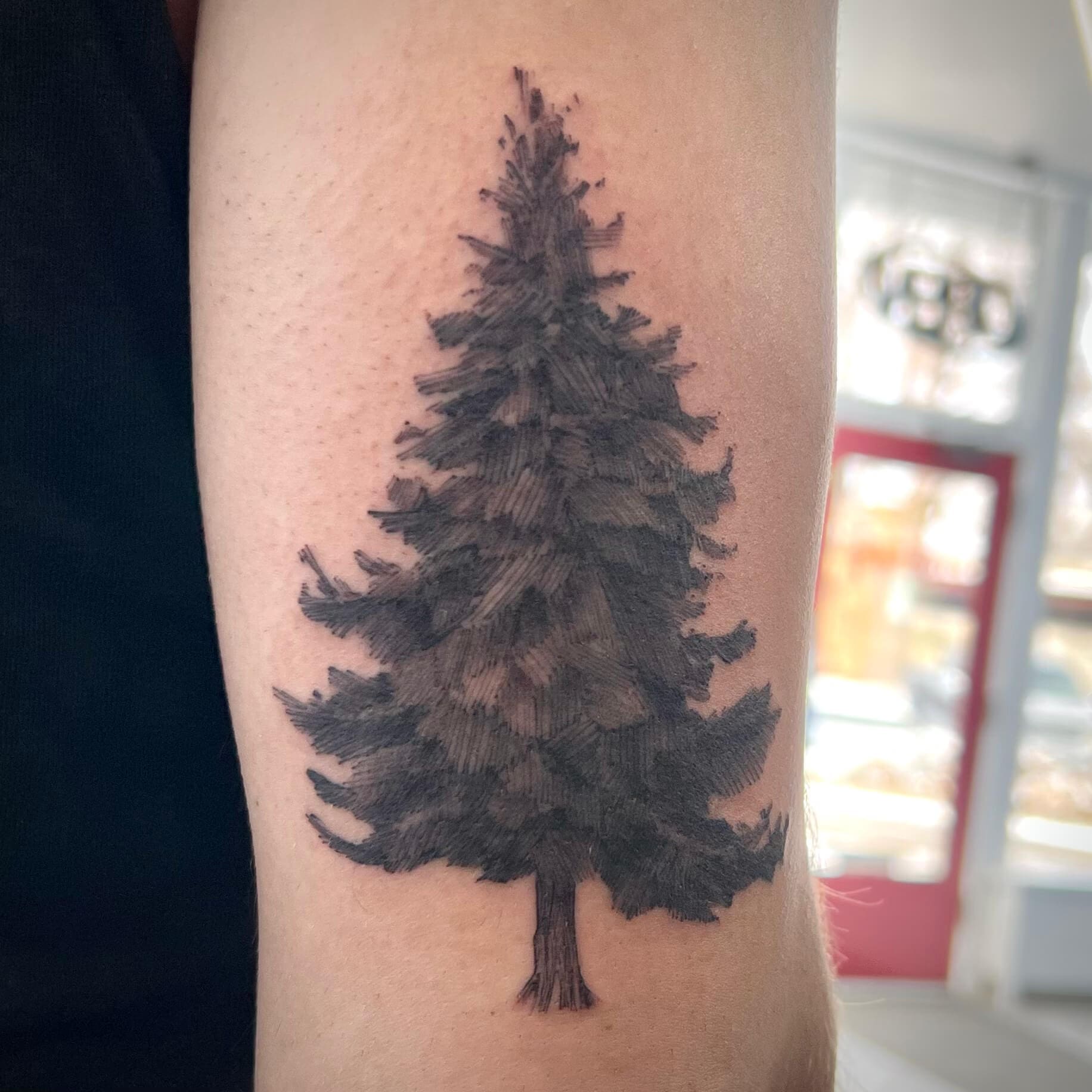
A fresh black and grey tattoo rarely shows its final tonal balance.
Black areas often look extremely dark, grey wash may appear heavier than expected, and swelling can make edges seem sharper or less even. As the skin heals, the shading softens and the relationship between highlights, midtones, and shadows becomes clearer.
Key Takeaways
- Fresh black and grey tattoos usually look darker and more contrasted than healed work.
- Redness, swelling, surface ink, and moisture can temporarily change the appearance.
- Flaking and cloudy skin may make grey wash look patchy during the first two weeks.
- Most visible surface healing occurs within several weeks, but deeper settling can continue longer.
- Pale washes and fine details should not be judged before the skin has fully recovered.
Why Black and Grey Tattoos Change During Healing
Tattooing places pigment beneath the outer surface of the skin while creating a controlled wound.
The body responds with redness, swelling, fluid, dryness, and tissue repair. These temporary changes affect how the pigment looks from the surface.
Fresh black ink may appear glossy and extremely dense.
Grey wash can look almost as dark as black in some areas because of surface ink, blood, plasma, irritation, and moisture. Once the outer skin settles, the diluted pigment becomes more transparent.
Natural skin texture also returns during healing.
This softens the crisp appearance seen immediately after the session and makes the tattoo look more integrated with the body.
Black and Grey Tattoo Healing Timeline
Healing speed varies according to tattoo size, placement, session length, skin condition, application, and individual health.
The table below describes a common progression rather than an exact schedule for every person.
| Healing Stage | Common Appearance | What Is Happening |
| First 24 hours | Dark, glossy, swollen, red | Fluid release and early inflammation |
| Days 2 to 3 | Tight, dry, darker in places | Surface begins closing |
| Days 4 to 7 | Flaking, peeling, uneven tone | Damaged outer skin sheds |
| Week 2 | Cloudy, dull, lightly itchy | New surface skin develops |
| Weeks 3 to 4 | Softer and more balanced | Surface healing becomes more complete |
| Months 1 to 3 | Settled tonal relationships | Deeper layers continue stabilizing |
The First 24 Hours
Immediately after tattooing, the design usually appears darker, sharper, and more dramatic than the planned result.
Solid black areas may look glossy and nearly featureless because the skin is swollen and coated with moisture. Light grey wash can also appear unexpectedly dark.
Some redness around the design is common.
Clear or slightly ink-colored fluid may collect beneath a protective covering or appear on the surface. This mixture can include plasma, excess pigment, and small amounts of blood.
The tattoo may feel warm, sore, or similar to a mild sunburn.
The exact level of discomfort depends on placement, session length, shading density, and individual sensitivity.
At this stage, the tattoo should not be evaluated for smoothness or final contrast.
Inflammation can temporarily distort fine lines, soften edges, and make neighbouring values appear more similar.
Days Two and Three
The tattoo may begin to feel tight as the surface dries.
Black areas can remain very dark, while grey wash may look flat or slightly brown depending on the skin tone, lighting, and remaining surface residue.
Swelling should generally begin to reduce rather than continue increasing.
Some areas may remain tender, especially around joints, heavily shaded sections, or placements where clothing creates pressure.
A thin surface layer may begin to form.
The tattoo can appear shiny, slightly raised, or uneven as the outer skin starts repairing itself.
This stage often makes people worry that the tattoo is too dark.
The visible pigment has not yet settled, and the surface skin is still altering how light passes through the design.
Days Four Through Seven
Flaking and peeling commonly begin during the first week.
Small pieces of dry skin may lift from the tattoo, making the shading appear patchy or lighter in some areas.
This does not automatically mean pigment is falling out.
The outer damaged skin is shedding, while most tattoo pigment remains beneath the surface.
Grey wash can look inconsistent during peeling.
One section may appear dark and smooth, while another looks pale, cloudy, or temporarily faded.
Solid black may also lose its glossy appearance.
As the surface dries, it may look dull or textured rather than dense and reflective.
Itching often becomes more noticeable during this stage.
Scratching or removing peeling skin can increase irritation and interfere with the healing surface.
Week Two Through a Month
By the second week, much of the visible peeling may be finished.
The tattoo can still look cloudy, muted, or covered by a thin silver layer of new skin.
This temporary appearance is sometimes described as a milky or frosted stage.
The new surface skin has not yet returned to its usual texture and transparency.
Light grey washes may seem unusually faint.
Fine details can also appear less sharp than they did when the tattoo was fresh.
These changes are often temporary.
As the surface continues settling, the value structure becomes clearer and the grey tones begin to look more natural.
Occasional dryness or mild itching may remain.
The tattoo should generally feel less sore and less inflamed than it did during the first several days.
Why Healed Skin Changes Perceived Contrast
Black and grey shading changes because the tattoo is viewed through skin that is actively repairing itself.
Immediately after tattooing, redness, swelling, plasma, surface pigment, and moisture can make dark values look heavier and increase the apparent contrast between black ink and open skin. Irritation may also give untouched highlights a pink or red tone, temporarily reducing their brightness.
As the outer skin closes and renews, dryness, peeling, and newly formed surface tissue scatter light differently. This can make grey wash appear cloudy, pale, or uneven even when the pigment beneath the surface has not changed significantly.
Once the skin regains a smoother texture and more normal transparency, light passes through the surface more consistently. The healed tattoo then shows a clearer relationship between natural skin highlights, translucent grey wash, darker midtones, and solid black.
Tonal values stabilize because temporary surface conditions are no longer changing from day to day. Excess surface pigment has cleared, inflammation has decreased, and the renewed skin layer allows the settled pigment to be viewed more accurately.
| Skin Condition | Effect on Perceived Shading |
| Redness and swelling | Makes black appear heavier and highlights less clear |
| Plasma and surface ink | Temporarily increases darkness and gloss |
| Dryness and peeling | Creates patchy or uneven-looking values |
| New surface skin | Makes shading appear cloudy or muted |
| Settled skin texture | Reveals softer and more stable tonal contrast |
The final shading appears softer than the fresh tattoo because healed skin adds its natural tone and texture over the pigment. This softening is expected and helps the values look more integrated with the body rather than sitting sharply on the surface.
Common Healing Concerns
A black and grey tattoo may seem too dark immediately after the session.
This usually improves as surface ink clears, swelling decreases, and grey wash becomes more transparent.
The tattoo may then appear too light during peeling.
Cloudy skin and temporary dryness can reduce contrast until the surface settles.
Fine details may look blurred for several days.
Swelling and new skin can soften their appearance, especially in portraits, microrealism, and fine-line designs.
Small areas may heal lighter than expected.
These sections should be reviewed only after the artist’s recommended healing period has passed.
Frequently Asked Questions
Can cold weather make a healing tattoo look different?
Cold, dry conditions can increase surface dryness and make flaking more noticeable.
The pigment itself does not immediately change because of cold weather, but irritated or dehydrated skin can temporarily affect its appearance.
Why does a healed black and grey tattoo look different indoors and outdoors?
Lighting changes how contrast and skin tone are perceived.
Natural daylight often reveals softer grey transitions, while strong indoor lighting may make dark values appear heavier.
Can weight changes affect a newly healed black and grey tattoo?
Major changes in body size can alter skin tension and the shape of a tattoo.
Why does grey wash sometimes look more visible after several months?
The skin can continue settling after surface healing appears complete.
Let the Shading Settle Before Judging the Result
Black and grey tattoo healing is a gradual change from fresh darkness to settled tonal balance.
During the first two weeks, swelling, peeling, dryness, and cloudy skin can make grey wash appear uneven or cause solid black to look different from day to day.
The design becomes easier to evaluate as the surface heals and natural skin texture returns.
Highlights grow clearer, midtones soften, and deep black areas take their place within the full value range.
Patience is essential.
A black and grey tattoo should be judged by its settled structure and readability, not by the temporary appearance created during the first days of healing.